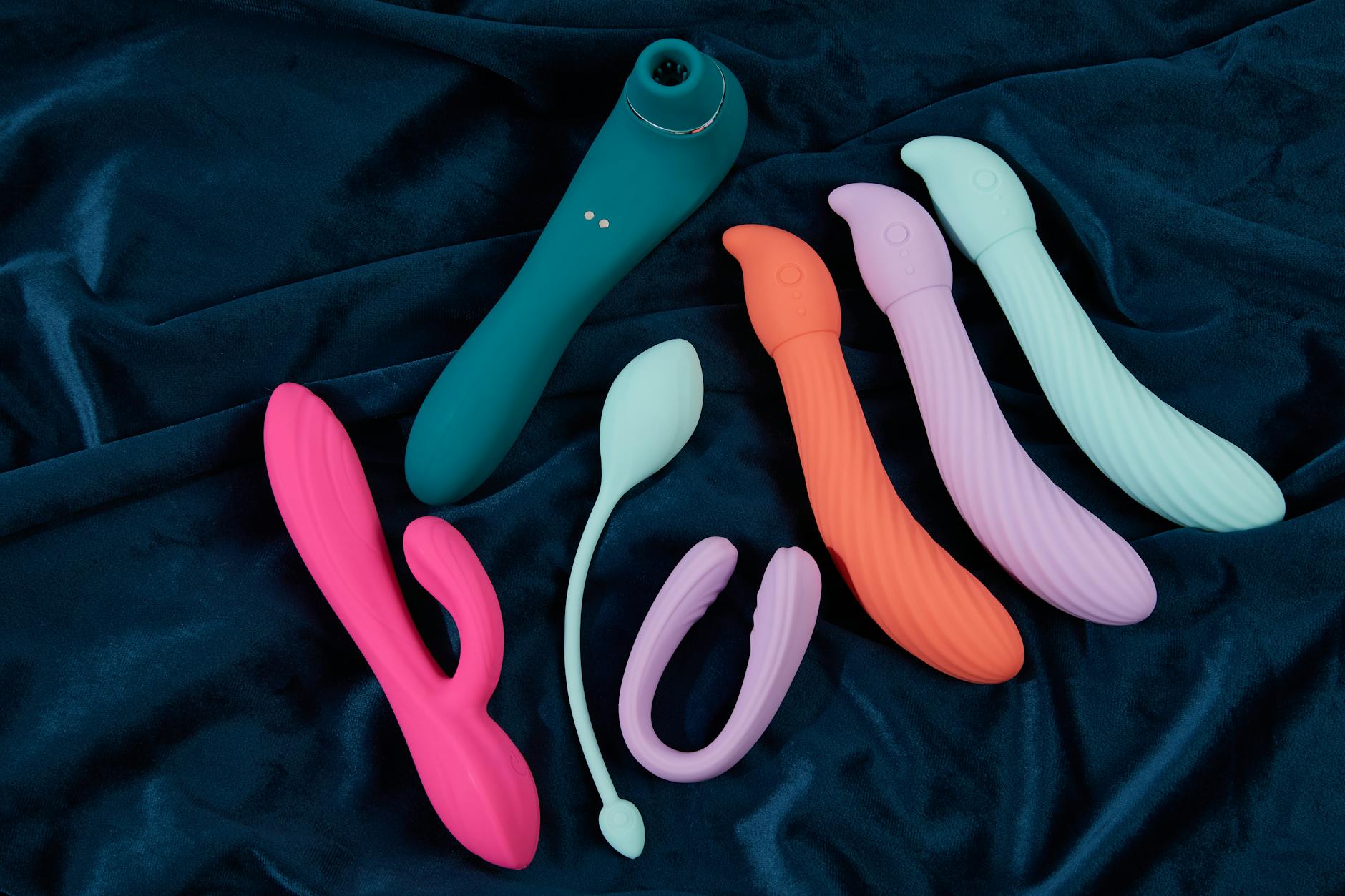
Here's the thing about lemon vibrators and settings
Most people think clitoral vibrators come down to two options: on or off. Turn it on, use the same intensity every time, maybe click through two patterns if you're feeling adventurous. That's like buying a car and only ever driving in one gear.
Lemon vibrators, particularly air-suction toys like the Lem, give you granular control over your experience. You have intensity levels, suction depth variations, and rhythm patterns. The catch? Nobody explains how to use them strategically. You're supposed to just figure out what works through trial and error, which wastes time and sometimes lands on a setting that's fine but not what your body actually craves that day.
I want to change that. After working with hundreds of people navigating pleasure, I've noticed clear patterns about which settings work for which goals. Here's how to customize your lemon clitoral vibrator instead of defaulting to autopilot.
Low intensity for sensitivity and warm-up
If you're desensitized, recovering from long-term vibrator use, or have tender tissue, settings 1 and 2 become your home base. This is where the magic happens, and it's wildly underestimated.
Low intensity does three things at once. First, it doesn't numb you out. The whole point of retraining sensitivity is giving your nerve endings small, manageable signals to respond to. Throwing a 7 or an 8 at already-sensitive tissue is like shouting when someone's already listening closely.
Second, low intensity forces you to slow down. You can't rush an orgasm on level 1 of a lemon vibrator. You have to actually pay attention to when sensations peak and dip. That builds anticipation and makes the release feel earned, not just triggered.
Third, low settings give you room to build. Starting at 2 and gradually escalating to 4 or 5 over 15 minutes creates a much longer, deeper arc than starting at 6 and flatting out at 8.
If you're recovering sensation after long-term vibrator use, I recommend spending a full week on settings 1 and 2 only. Yes, a whole week. Your nervous system needs to remember what subtle feels like.
Medium intensity for solo exploration and steady build
Settings 3, 4, and 5 are where most people actually live. Not too aggressive, not too slow. This range lets you explore without committing to a climax.
Use medium intensity when you're curious rather than goal-oriented. You're testing how different patterns feel against various parts of your vulva. You're learning whether the outer edges or the center point of your clitoris responds better. You're noticing how rhythm changes sensation.
Medium settings are also your zone for extended sessions. If you're building stamina or trying to last longer than your typical climax window, staying in the 3-5 range for 20 or 30 minutes trains your body to sustain arousal without tipping over into orgasm.
Lemon suction vibrators shine here because the moderate intensity paired with gentle, rhythmic suction creates a full-body arousal state without the sharp peak-and-drop of higher settings. You're building capacity, not just chasing release.
High intensity for directed, efficient climax
Settings 6, 7, and 8 are your shortcut to orgasm. Use these when you know exactly what you want and you have limited time. There's nothing wrong with efficient pleasure.
High intensity also works when you're feeling numb, distracted, or your nervous system needs a strong signal to engage. Some days your body just requires more volume. That's information, not failure.
The lemon clitoral vibrator at higher settings creates a focused, almost meditative quality because the intensity is so specific. You can't wander mentally. Your brain locks in. That can be exactly what you need.
One caveat: if you spend most of your sessions on high intensity, you're training your nervous system to prefer that input level. That means lower settings start feeling weak. Sensitivity can shift over time with vibrator use, which is why variety matters.
Pattern selection for different sensations
Beyond intensity, lemon vibrators typically offer 3 to 7 rhythm patterns. Most people pick one and never touch the others.
Steady pulse patterns feel reliable and predictable. Use these for warm-up or when you want to focus on your own rhythm rather than the toy's. Your body sets the pace; the vibrator just provides consistent sensation.
Escalating or wave patterns build intensity gradually. These work beautifully for mid-session transitions, moving from exploration into goal-oriented stimulation. They mirror the natural arc of arousal.
Staccato or stuttering patterns feel novel and keep your nervous system engaged. If you're bored with your typical sensations, switching patterns can trick your body into responding as if you're using a different toy entirely.
Switching patterns mid-session is underrated. Try starting with pattern 1 for five minutes, then moving to pattern 3 for the next five. You're preventing habituation and keeping sensation fresh.
Suction depth for comfort and intensity control
Unlike traditional vibrators, lemon vibrators that use air-suction technology (like the Lem design) let you adjust how much of your clitoris fits into the cup. This is crucial, and I see people miss it constantly.
Shallow suction (about one-third of your clitoris in the cup) spreads sensation wider and feels gentler. Use this for warm-up, for sensitive tissue, or when you want broad stimulation rather than direct focus.
Medium suction (about half inside) targets the clitoral head and glans. This is the sweet spot for most people most of the time. It's specific enough to drive arousal but not so concentrated that it becomes uncomfortable.
Deep suction (most of your clitoris in the cup) creates intense, direct stimulation. This accelerates climax and works well when you're already highly aroused. It can also feel overwhelming at the start, so save it for when your body is primed.
The thing about depth is that you can adjust it at any intensity level. You could use deep suction at setting 2 for a completely different experience than deep suction at setting 6. Experiment with mixing them.
Settings for partnered pleasure
If you're using a lemon clitoral vibrator with a partner, intensity and pattern become communication tools.
Lower settings (1 to 3) let your partner watch and interact without you being fully absorbed. You can talk, make eye contact, respond to their touch. This works for foreplay or when you want the vibrator as accent rather than lead.
Higher settings (6 to 8) create intensity that requires your focus. You might close your eyes, quiet down, pull inward. Signal this boundary to your partner before you start. Some partners read withdrawal as disinterest; preemptive communication prevents that misreading.
Pattern changes are foreplay themselves. Have your partner click through patterns while you're at a medium intensity. Let them take the control (literally or metaphorically). Many couples find that passing the toy back and forth between settings creates a rhythm and collaboration that feels intimate in a different way than using it solo.
Warm-up and cooldown matter more than climax
Here's what I tell people who want to optimize their lemon vibrator experience: forget about the endpoint. Build strategy around the 10 minutes before climax.
Start with intention. Know whether you're aiming for quick release, extended exploration, or building stamina. That determines your opening intensity. Quick release? Start at 3 or 4. Extended exploration? Stay at 1 or 2 for the first ten minutes.
Progress slowly. Every five minutes, ask yourself whether sensation is still interesting or whether it's flattening. If you feel yourself plateauing, change the pattern or shift the suction depth before increasing intensity. You're preventing habituation.
Notice the arc. Real arousal isn't a straight line. It builds, dips slightly, builds more, plateaus, then peaks. Your lemon vibrator settings should follow that arc, not override it. If you're at a level 4 and sensation suddenly drops, switch patterns instead of jumping to 6.
Cooldown is part of the experience. After climax, many people immediately turn the vibrator off. Spending 30 seconds at a very low intensity (level 1) lets your nervous system reset gently rather than dropping from peak to zero. That prevents overstimulation.
When to adjust settings based on hormonal cycles
Your body isn't the same every day. Hormonal shifts affect sensitivity, arousal timeline, and what feels good.
During the follicular phase (post-menstrual bleeding, leading to ovulation), higher intensity often feels better earlier. Your estrogen is climbing, tissue is more engorged, nerve sensitivity increases. You might need less warm-up time and prefer settings in the 5 to 7 range where normally you'd peak at 4.
During the luteal phase (after ovulation, leading to menstruation), sensitivity often drops slightly. The same setting that felt perfect last week feels underwhelming. This is normal. Shift your baseline up by one or two levels or spend more time at medium intensity with pattern variations before moving to higher settings.
If you track your cycle, note which lemon vibrator settings felt best each week. Over three or four months, a pattern will emerge. You're learning your body's seasonal rhythms. That information is gold.
People also ask
What's the best starting intensity for a lemon vibrator if I'm completely new?
Begin at setting 1 or 2 for at least 5 minutes, even if it feels gentle. You're letting your body recognize the sensation without jumping straight to intensity. After that initial warm-up, move to 3 or 4 if you're comfortable. The lemon clitoral vibrator's suction technology means even moderate settings create focused sensation, so you don't need high intensity to feel results. Resist the urge to escalate quickly. Slower exploration teaches you more.
Can I damage my sensitivity by always using high intensity?
Sensitivity can shift with consistent high-intensity use, though it's not permanent damage. Your nervous system adapts to whatever input it receives regularly. If you spend months at settings 7 and 8, lower settings start feeling weak by comparison. This is why variety matters. Rotating through different intensities and patterns throughout the week, and occasionally dedicating a few days to lower settings, keeps your nervous system responsive across the full range. Think of it like auditory contrast. A constant loud noise becomes background. A varied soundscape stays engaging.
Should I use the same pattern every time or switch it up?
Switch. Using identical settings and patterns trains your body to respond in one specific way, which narrows pleasure over time. Every third or fourth session, try a new pattern at the same intensity you normally use. You'll notice that the same setting feels completely different with pattern variation. This prevents habituation and keeps sensation fresh. Mixing patterns is particularly useful in the middle of a session. Start predictable, shift the rhythm halfway through.
Does suction depth matter more than intensity for lemon vibrators?
They work together. Suction depth determines what nerve tissue gets stimulated and how concentrated that stimulation feels. Intensity determines how strong the signal is. Shallow suction at level 5 feels completely different from deep suction at level 5. Neither is better universally. Shallow suction feels broader and works well for warm-up and extended sessions. Deep suction feels direct and accelerates arousal. Experiment with depth at your favorite intensity level to discover new sensations without changing overall stimulation power.
What if no setting feels right?
This usually means one of three things. First, your body needs different warm-up time than you're giving it. Spend an extra 10 minutes at medium intensity before jumping to your typical setting. Second, the angle or positioning needs adjustment. The lemon suction toy works best when the seal is consistent. Shift angle slightly until sensation clicks. Third, you might need mental permission to slow down. Performance pressure kills arousal. Set a timer for 20 minutes with no orgasm goal. Just explore. Pressure often dissolves when the endpoint disappears.
How do I talk to a partner about my specific lemon vibrator settings?
Be specific. Don't say "I like it on high." Say "I want to start at setting 2 for warm-up, then move to pattern 3 at setting 4, and only go higher if I ask." Share why. "Low intensity at the start helps me feel more sensation overall." Make it about physiology, not criticism. A partner who understands your settings as part of your nervous system's language, not as rejection of their touch, will collaborate easily. Some couples put the toy in the partner's hands deliberately as a way to build anticipation and communication. That can be powerful.
The real skill is knowing when to break your own rules
All of this is framework, not law. You'll discover that sometimes the setting you thought you'd never use becomes essential. Sometimes high intensity right out of the gate is exactly what you need. Sometimes low-intensity exploration takes you deeper than you've ever gone.
The point is to be intentional instead of defaulting to muscle memory. Your lemon vibrator is capable of creating dozens of distinct sensations. Most people use three. You don't have to. Understanding how different clitoral vibrators work is step one. Customizing your experience is step two.
Your pleasure is worth the two minutes it takes to dial in what actually works. Not what worked last month. Not what a friend said worked for them. What works for your body, today, in this moment. That's the difference between using a lemon vibrator and experiencing one.