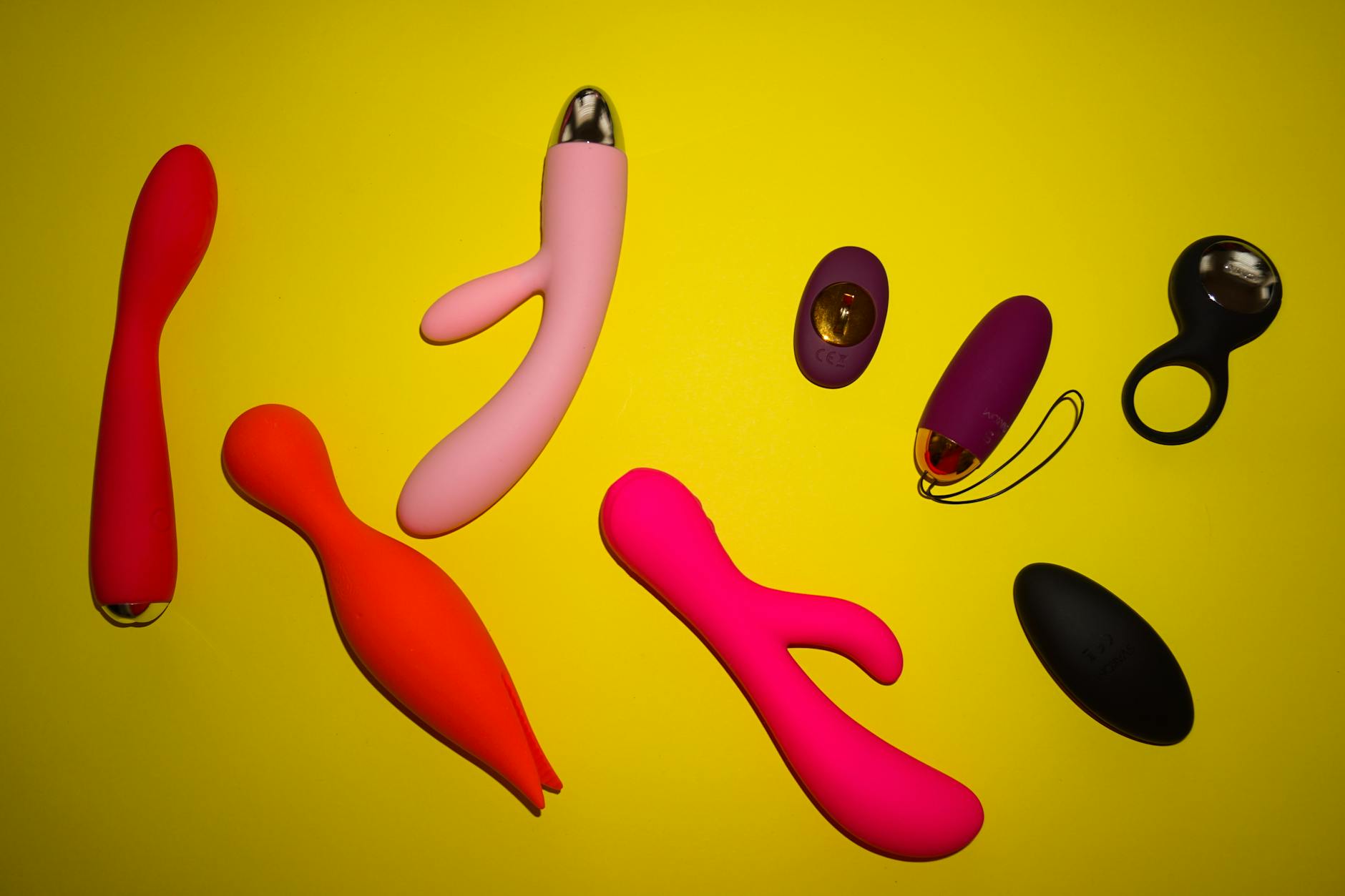
Let's talk about vibrator habituation
You've been using the same lemon vibrator for two years. It used to send you to the ceiling in minutes. Now you need twenty minutes of straight stimulation just to feel anything. You're not broken. Your nervous system just got really, really efficient at tuning out the signal.
This is vibrator habituation, and it's weirdly common but almost nobody talks about it. The good news? It's reversible. The better news? The reset process often leads to even stronger sensation than you had before.
Why your body stops responding to the same stimulus
Your nervous system is built to detect change. When a signal stays the same long enough, your receptors stop screaming about it. This is called sensory adaptation, and it's not a design flaw. It's a feature. It lets you ignore the constant pressure of clothes on your skin or the ambient hum of traffic outside your window.
But it also means that if you use the exact same vibrator at the exact same intensity for years, your body eventually files it under "background noise."
The clitoris has about 8,000 nerve endings. When a vibrator hits the same frequency (typically 5,000 to 10,000 Hz for most lemon clitoral vibrators) at the same amplitude over and over, those nerves acclimate. The brain stops prioritizing the signal. Pleasure softens. Orgasm takes longer. Or it stops happening at all.
This doesn't mean your capacity for pleasure is damaged. It means your nervous system learned to be bored.
The reset: taking a real break
The counterintuitive part: the fastest way to rebuild sensation is to step back from vibrators entirely for a period. Not forever. Usually two to four weeks.
I know. This sounds like punishment. It's not. It's neuroplasticity working for you instead of against you.
When you stop using vibrators, your nervous system stops expecting the signal. The adaptation fades. Your sensory receptors essentially say, "Oh, okay. False alarm. We're back online." After three weeks without vibration, your clitoris becomes sensitive again the way it was when you first started.
During this time, you're not giving up pleasure. You're redirecting it.
What to do during the reset period
Your hands matter more than you think. Manual stimulation, partnered touch, even fantasy without any physical stimulation (yes, really) will keep your nervous system engaged without the specific signal your body learned to ignore.
Think of it like this: if you always eat the same restaurant, their menu becomes invisible. But if you try three different restaurants for a month, suddenly the first place tastes interesting again.
Some people add kegel exercises during this window. The practice doesn't just strengthen the pelvic floor. It increases blood flow to the tissue, which means more sensitivity. Spend ten minutes a day on controlled pelvic floor contractions and releases.
Others find this is when partnered sex becomes more satisfying. Without the goal of orgasm through one specific tool, intimacy deepens. You notice touch you usually skip. You slow down.
The comeback: smart reintroduction
After three to four weeks, start again. But don't jump back to your old routine.
First session: use a lemon vibrator at pattern 1 or 2. Not your usual intensity. Not even close. You'll probably think it's too weak. Use it anyway for five to ten minutes. Your nervous system is hungry for this signal. You might be surprised how fast you respond.
Second week: alternate. One session at low intensity, one without any vibrator. This keeps your nervous system from resettling into the same adaptation pattern.
Third week and beyond: you can introduce variation. Different vibrators. Different patterns. Different timing. The key is that your lemon vibrator or any clitoral vibrator isn't the same stimulus hitting the exact same spot at the exact same frequency every single time.
Why pattern switching actually works
Most clitoral vibrators, including the Lem and other lemon sexual toys, come with multiple patterns and intensity settings. If you've been using pattern 7 for months, your body stopped noticing it. But pattern 3 is still fresh. Pattern 5 is still novel.
Rotating between three or four patterns keeps your nervous system engaged. You're not training habituation. You're training sensitivity.
This is why lemon clitoral vibrators with multiple patterns often outperform single-mode vibrators long term. They let you vary the stimulus without changing tools.
The partner conversation
If you're in a relationship, this is worth naming. "I'm doing a sensitivity reset" is not "I'm not interested in sex with you." They're different conversations. One is about your nervous system. The other is about connection.
In fact, how lemon vibrators work better for relationship reconnection often comes down to this exact moment. The reset forces you to slow down. It forces conversation. Many couples find that the reset period actually strengthens their intimate connection because it removes the goal-oriented, tool-dependent approach.
The timeline: what to expect
Week one of the break: you'll probably feel bored. Your body is used to that signal. It misses it.
Week two: that fades. You might notice other forms of touch more acutely. Manual stimulation feels different. Partnered touch lands harder.
Week three: most people report that the urge to return starts feeling less frantic. Patience clicks in.
Week four: you're ready to reintroduce.
First session back: often surprisingly satisfying. Your sensitivity returned faster than you expected.
Weeks two through eight of reintroduction: steady progress if you're rotating patterns and intensity levels.
When to consider other factors
If four weeks off plus careful reintroduction doesn't rebuild sensation, something else might be at play.
Hormonal changes are a big one. If you're on certain antidepressants or hormonal contraception, your baseline sensitivity is lower. That's neurochemistry, not habituation. Check with your doctor before assuming it's the vibrator.
Stress and sleep deprivation kill arousal faster than anything else. If you're running on five hours of sleep and two coffee drinks, no vibrator will help. Sleep and stress management come first.
Partner dynamics matter too. If you're anxious about being watched, or if your partner's presence actually makes you tense, no tool fixes that. The issue is in the nervous system's threat detection, not in the vibrator itself.
But if you're well-rested, not on medications that affect arousal, and you've given yourself a proper reset? Sensation comes back. Usually within weeks.
The sensitivity paradox
Here's the strange part: many people report that after a reset, their sensitivity is stronger than it was before habituation. Deeper orgasms. Faster response time. More varied pleasure.
This is partly neuroplasticity rewiring itself intelligently. Your nervous system learned how to adapt. Now it learns how to recover. That skill stays.
It's also partly the fact that you're paying attention differently. You've been reminded that variation matters. Your nervous system stays engaged instead of coasting.
Preventing the reset from happening again
Once you're back to strong sensation, the goal is to keep it. This doesn't mean abandoning your favorite lemon vibrator. It means using it smartly.
Rotate patterns even when you don't need to. Use different tools sometimes. Take occasional breaks. One week off every few months isn't extreme. It's maintenance. Your nervous system benefits from novelty the way your brain benefits from reading new books instead of the same one over and over.
Some people find that using their clitoral vibrator three or four times a week instead of daily prevents habituation from building in the first place. Others rotate between a lemon vibrator and manual stimulation. There's no single rule. The rule is variation.
Your sensation isn't gone. It's just been filed under routine. A reset brings it back to the front of the drawer.
FAQ: Sensation recovery and vibrators
How long does it take to recover sensation after vibrator use?
Most people regain baseline sensitivity within three to four weeks of stopping vibrator use completely. Full recovery and strong rebound sensation typically appears within six to eight weeks if you're also rotating patterns and intensity levels during reintroduction. Some people experience noticeable improvement in week two.
Can I speed up the sensation recovery process?
Taking a complete break is the fastest method, but you can accelerate recovery by combining the break with pelvic floor exercises, which increase blood flow to the tissue. Manual stimulation and partnered touch during the break also keep your nervous system engaged without the specific stimulus your body adapted to. Sleep and stress reduction help too.
Is vibrator habituation permanent?
No. Sensory adaptation is reversible. Your nervous system is designed to learn and relearn. Even after years of habituation, a proper reset rebuilds sensitivity. The longer you've been habituated, the longer the reset might take, but it's not permanent.
Should I switch to a different vibrator instead of taking a break?
Switching tools can help, especially if you move to a vibrator with different patterns or intensity ranges. But if you're switching to another vibrator that uses the same frequency and intensity, you might just continue the same adaptation pattern under a different name. A break allows your nervous system to fully reset, which is more complete than just changing tools.
Does vibrator habituation affect orgasm ability?
Habituation usually makes orgasm harder to achieve or slower to arrive, not impossible. Once sensation recovers, orgasm returns to baseline and often becomes stronger. The nervous system hasn't lost its capacity. It's just deprioritized the signal.
What's the difference between habituation and permanent desensitization?
Habituation is your nervous system filtering out a repeated signal. It's reversible with time and variation. Permanent desensitization would be tissue damage or nerve damage, which is rare. What most people call "permanent" desensitization is actually habituation that they haven't reset yet. If you're worried about actual tissue damage, talk to a gynecologist. Otherwise, assume it's adaptation.
Can I use my lemon vibrator differently to avoid habituation?
Absolutely. Rotate patterns. Change intensity levels. Take occasional breaks. Vary your timing throughout the week. Use it three times a week instead of daily. Combine it with manual stimulation. Any variation prevents your nervous system from settling into the same repetitive signal.
The bottom line
Your sensitivity isn't broken. Your body just got efficient at filtering noise. A reset brings you back to baseline faster than you think, and a strategic approach to reintroduction keeps you there. Most people come out of this process with stronger sensation than they had before, because they've learned how to keep their nervous system engaged instead of on autopilot.
If you're ready to reset, give yourself three to four weeks off. Then come back with variation built in. Your favorite clitoral vibrator will feel like the first time all over again.