Let's talk about the thing nobody addresses
Premature climax doesn't just affect one person. It affects both of you. One partner feels rushed, anxious about timing, and disconnected from what's actually happening in their body. The other feels frustrated, sometimes resentful, occasionally questioning whether there's attraction or just efficiency. Neither of you is having fun.
Here's what I see in my practice: the moment you introduce a lemon vibrator into this dynamic, the entire energy shifts. Suddenly, there's no clock. There's no performance metric. There's just two people exploring sensation together.
Why performance pressure kills pleasure
When penetration is the main event, the person with a shorter refractory window becomes hyperaware of their own body's timeline. Anxiety spikes. The parasympathetic nervous system (the one responsible for arousal) gets crowded out by the sympathetic nervous system (fight-or-flight). Everything tightens. Everything speeds up further. It becomes a self-fulfilling prophecy.
Meanwhile, the partner with a vulva is often left unsatisfied, either finishing alone later or accepting an incomplete experience. Over months or years, resentment builds quietly. You stop initiating. Sex becomes something that happens to you rather than something you both want.
The research backs this up: couples who introduce external stimulation (especially clitoral focus) report significantly higher satisfaction, longer sessions, and lower anxiety around performance. A lemon vibrator isn't a band-aid. It's a reset button.
How suction stimulation changes the equation
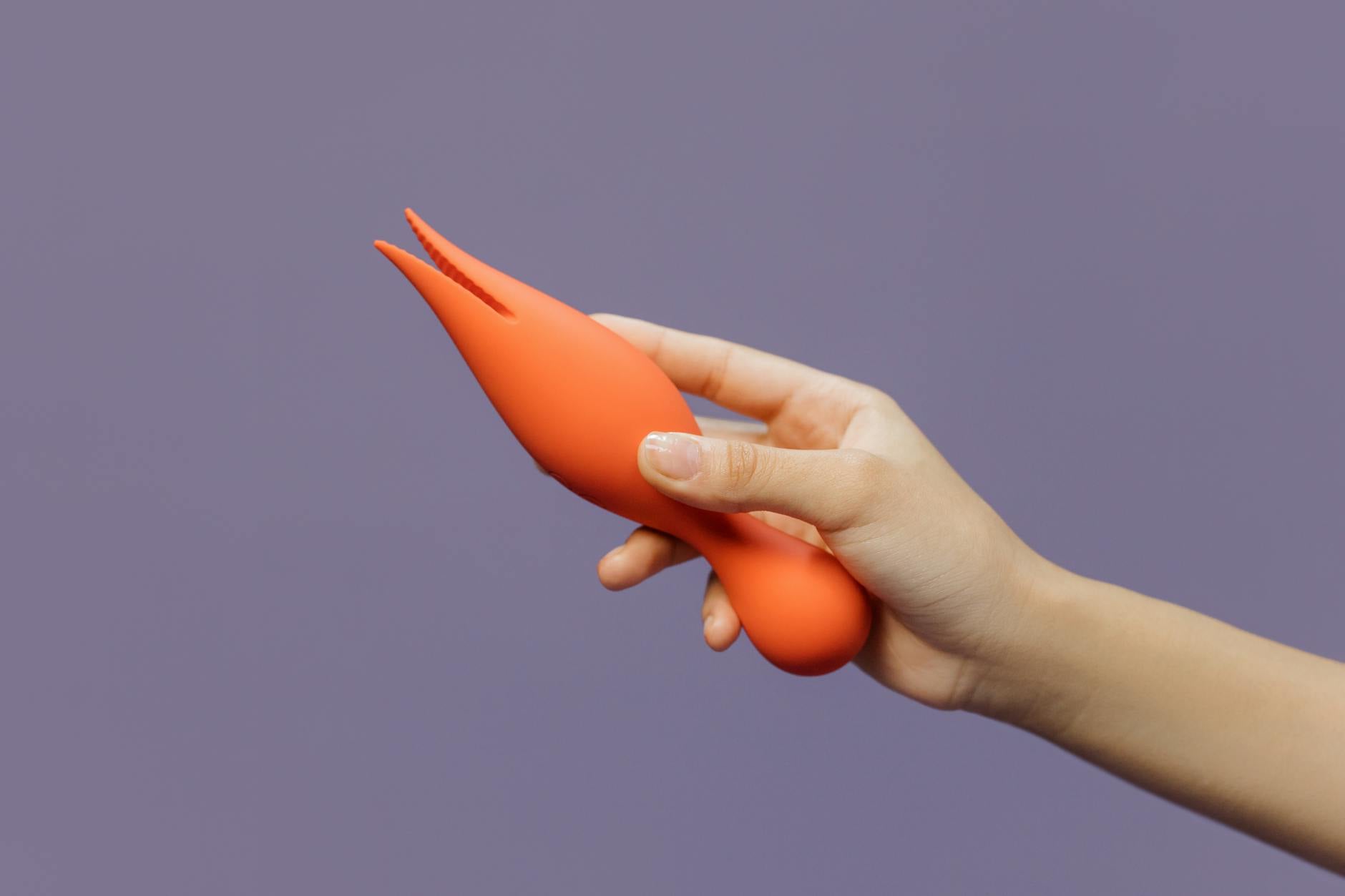
A lemon clitoral vibrator works differently than traditional vibrators or penetrative stimulation. It uses gentle suction combined with pulsation to engage the clitoral complex without the kind of direct friction that can feel overwhelming or one-note.
Here's what that means for you as a couple:
1. Extended pleasure windows. You can spend 20-30 minutes on clitoral pleasure alone without anyone getting fatigued, numb, or frustrated. That extended timeline naturally reduces pressure on the partner with a penis. You're not counting down to climax. You're genuinely exploring.
2. Separate trajectories. The partner using the lemon vibrator is managing their own arousal on their own timeline. This removes the subconscious pressure on the other partner to "perform" or "last." They're supporting, not performing.
3. Pleasure as the goal, not intercourse. When you shift from "Can I last long enough?" to "What feels good right now?", the entire interaction becomes less goal-oriented. Ironically, this often leads to better outcomes for both of you.
The practical setup that works
I recommend this framework to couples dealing with this issue:
Phase 1: Foreplay with the lemon vibrator. Start here, no pressure to move anywhere else. Spend 15-20 minutes focused solely on what feels good. The partner without the vibrator can touch, kiss, or simply be present. No expectations beyond this moment.
Phase 2: Gradual escalation. Once arousal is genuinely built (not rushed), introduce penetration if you want it. But here's the key: keep the lemon vibrator in use. The clitoral stimulation continues. This takes the pressure off the penetrative partner's stamina because you're not relying on penetration alone for pleasure.
Phase 3: Flexibility. Some days, you might skip penetration entirely. Other days, it might be a small part of a much larger experience. The lemon vibrator gives you options instead of forcing one narrow script.
This isn't a workaround. This is actually how more satisfying sex works for most people.
Photo by cottonbro studio on Pexels
The conversation you need to have first
Introducing a lemon vibrator won't work if the underlying shame is still there. Before you buy one, you need to say out loud: "This isn't about me being bored or unsatisfied with you. This is about us both having more fun together."
Say it again. Say it until it feels true.
The partner who climaxes quickly often carries deep shame about it. They've probably internalized the message that their body is broken, that they're letting you down, that they should just be able to "control it." They can't, and shame makes it worse.
So when you introduce a tool like a lemon vibrator, frame it as an expansion, not a fix. You're not fixing them. You're building something together.
What happens after a few weeks
Once couples start using a lemon clitoral vibrator regularly, I see consistent patterns:
Lower anxiety. Both partners report less dread before sex. The performance pressure dissolves because the goal has changed.
Longer sessions. You're not rushing anymore. Thirty minutes together feels natural instead of impossible.
More communication. When you're focusing on "What feels good?" instead of "How much time do I have?", you start talking during sex in ways you didn't before. That communication extends beyond the bedroom.
Reconnection. The resentment that builds around unsatisfying sex tends to fade when sex becomes satisfying. Couples report feeling closer, more affectionate, more willing to be playful together.
It's not magic. It's just removing the obstacle that was preventing you both from actually enjoying each other.
When to bring this up
Not during sex. Not immediately after. Pick a calm moment, maybe over coffee or while you're doing something else. "I've been thinking about us, and I want our sex life to feel better for both of us. I found something I think could help." Then show them the information, share the research, and ask what they think.
The goal isn't to pressure them into using it immediately. The goal is to open the conversation without shame. Some partners will be relieved. Some will need time. Some might want to choose the lemon vibrator themselves and surprise you. All of those are okay.
The real benefit
Honestly though, the biggest thing I see shift when couples use lemon vibrators together isn't the physical pleasure, though that matters. It's the permission structure.
A lemon vibrator gives you both permission to stop treating sex like a performance event with winners and losers. You stop keeping score. You start playing together.
And when the focus moves from "Will he last long enough?" to "What do we both want right now?", everything changes. The pleasure extends. The connection deepens. The shame dissolves.
That's the real magic.
FAQ: Lemon Vibrators and Premature Climax
Will using a lemon vibrator make my partner feel inadequate?
Not if you frame it right. The key is introducing it as "something we can enjoy together" rather than "something you're missing." When your partner understands that the lemon vibrator isn't replacing them but enhancing the experience for both of you, most appreciate the thoughtfulness. It's like suggesting trying a new restaurant. You're not saying the old place was bad. You're saying there's more to explore together.
How long does it take to see a difference?
Most couples notice a shift within the first few sessions, usually 2-3 weeks of regular use. The anxiety drops immediately once you're not focused on timing. Deeper reconnection typically takes a month or two. But the relief is often instantaneous.
What if my partner is embarrassed about having this issue?
Embarrassment is the biggest blocker I see. Normalize it first. "This is really common. It doesn't mean anything is wrong with you." Then move to solutions. A lemon vibrator reframes the whole thing from "I have a problem" to "We want more pleasure together." That shift in language matters.
Can a lemon vibrator help if the issue is anxiety rather than biology?
Absolutely. In fact, anxiety-driven premature climax often responds better to external tools because they short-circuit the performance anxiety loop. When the focus moves off the penetrative partner's body, anxiety naturally decreases. A lemon clitoral vibrator actively redirects attention toward mutual pleasure, which is the opposite of what anxiety feeds on.
Will this become something we always need?
Not necessarily. Some couples find that once they've rebuilt their sex life around more varied stimulation, they're less dependent on the vibrator. Others find they prefer it and keep using it. The goal isn't to create a dependency. It's to give you both options and freedom.
How do I bring this up without making it weird?
Lead with curiosity, not criticism. "I found something that could be really fun for us. I'd love to try it together." That's it. You're not saying there's a problem. You're inviting an experience. Most people respond positively to an invitation framed that way. If you're still nervous, start by sharing an article or research about why couples use lemon vibrators. Let them come to the conversation already informed.
The bottom line
Premature climax doesn't have to be a relationship issue. It can be the beginning of a conversation about pleasure that goes deeper and lasts longer than either of you expected.
A lemon vibrator isn't a solution to shame. But it is a tool that removes the performance pressure that makes shame worse. And once that pressure is gone, you might find that the real issue was never the timing. It was the conversation you weren't having.
If you'd like to talk through how to approach this with your partner, or if you have questions about building more satisfying intimacy, I'm here. Reach out anytime.