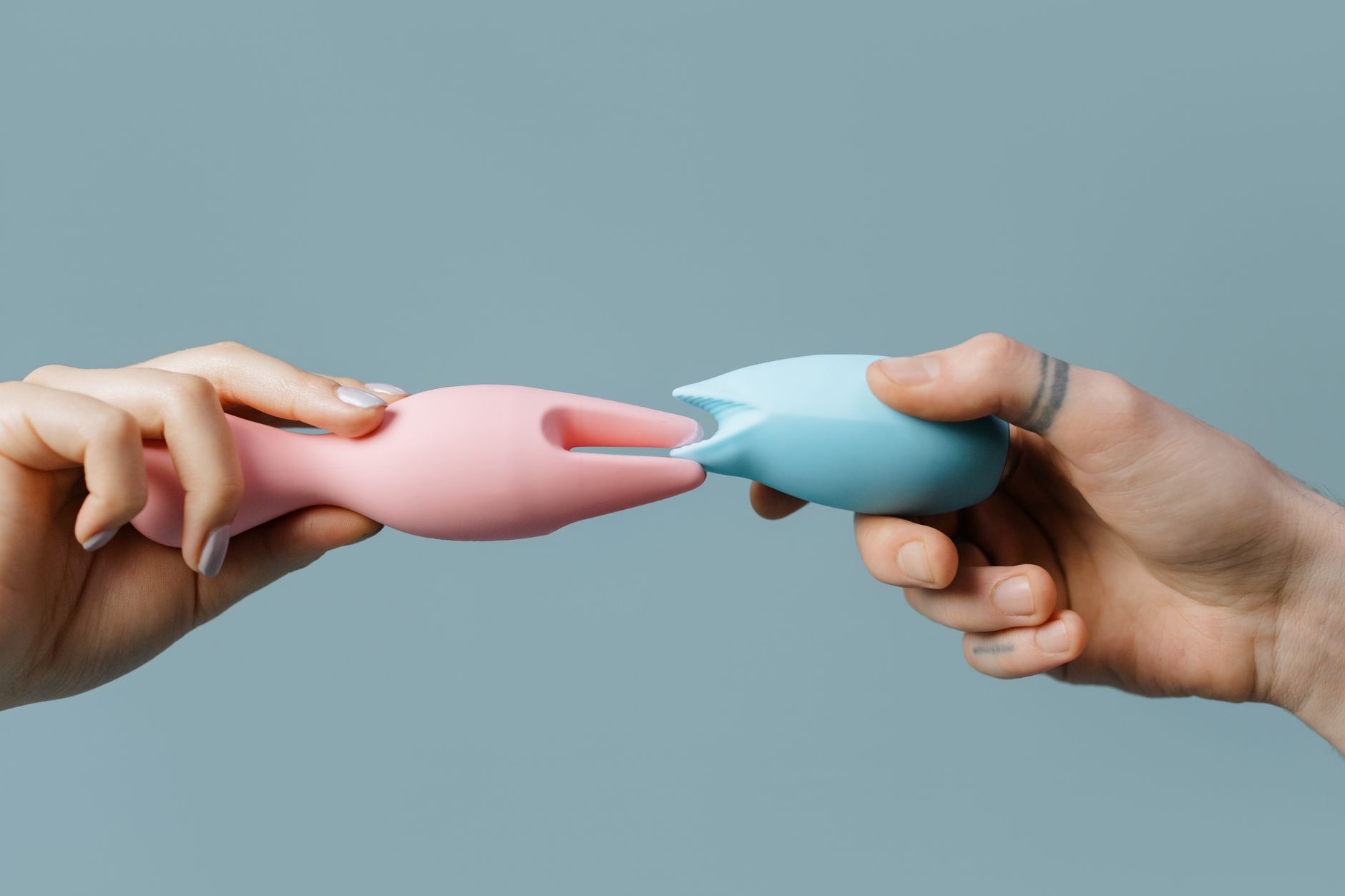
Here's what happens when you haven't touched in a long time
Your body forgets. Not the capacity for pleasure, but the muscle memory of how to get there. You've been apart for eight months because of work. Or two years because of a health crisis. Or you've been in the same house but so disconnected that it might as well have been another continent. When you finally decide to try again, both of you are nervous. Your partner's touch feels almost unfamiliar. You're wondering if you're still attracted. They're wondering if they're doing it wrong.
This is normal. And it's exactly why lemon vibrators exist.
When couples have been physically separated for extended time, the reconnection doesn't need therapy jargon or scheduled intimacy talks (though those help). What often matters most is removing the pressure. A lemon clitoral vibrator does that instantly. It becomes the third party in the room. Nobody's failing if the vibrator is the focus. Pleasure happens. Everything else follows.
Why the separation happened matters less than you think
Long-distance relationships, caregiver burnout, surgery recovery, grief, relocation for work. The cause shapes how you talk about the gap, but it doesn't change how your body needs to reconnect. What does change is the story you're telling yourself.
If you were apart because of circumstance (job, illness, family crisis), you're often rebuilding from a place of safety. You know the relationship is solid. You're just rusty. If the separation was relational (you grew apart, you had resentment, you stopped trying), the physical reconnection carries more weight. It's not just about pleasure. It's about proof that you still want each other.
Lemon sexual toys short-circuit both narratives. They move the focus from "Can we still do this?" to "Can we enjoy this together?" That's a completely different conversation, and it almost always goes better.
The first time back is awkward. Let it be.
Don't aim for earth-shattering. Aim for curious.
Set aside time when you're not exhausted or distracted. Not candlelit dinner (pressure) but genuinely protected time. Phone away, kids asleep or elsewhere, no rush to get somewhere after. For the first session back, I recommend: start clothed. Touch fully clothed, kiss, remember what that feels like. No vibrator yet. Just hands and bodies.
Then, if you both want to continue, introduce the lemon vibrator. Have the partner who's less familiar with it (or more nervous) hold it first. Alone. Figure out the buttons while the other person watches. Make it light. Make it exploratory.
Here's what I hear from couples after they try this: "We laughed. We actually laughed together for the first time in months." Laughter is the fastest way through awkwardness. A toy makes laughing easier because there's something to blame when things feel strange. "The buttons are confusing," beats "I feel vulnerable right now."
Building from pleasure, not pressure
Once you've both held the vibrator and played with the settings, the next step is using it together with intention. This is where technique matters, but less than you'd think.
If the partner with the vulva is the one using the vibrator: start on the lower settings. Remember that arousal takes longer than you might expect after a gap. Even if it took ten minutes before, budget twenty now. The clitoral vibrator does half the work, but your brain still has to be engaged. That means foreplay is still the foundation. Kiss. Touch. Talk. Then introduce the vibrator once there's already some response happening.
If the partner without the vulva is using it: watch for the response before you assume you know what they want. Every setting on a lemon clitoral vibrator feels different depending on the moment and the person. What felt amazing last month might feel jarring today. Verbal check-ins during the first few times aren't awkward. They're necessary. "Is this speed okay?" "Want me to move it here?" "Still good?" These questions deepen trust faster than you'd expect.
What changes after you've been apart
Sensitivity often decreases. This isn't damage. It's what happens when the neural pathways aren't getting regular stimulation. A lemon sucker or air-suction vibrator is gentler on desensitized tissue than a traditional vibrator. The sensation builds differently. It feels less direct and more enveloping, which many people find easier to return to when they're nervous.
Arousal patterns shift too. After time apart, you might need more mental engagement. Fantasy, talking during sex, thinking about what you want. Some couples find that their preferences have changed. The thing that worked three years ago might not hit right now. That's not a problem. That's information.
Lubricant becomes your friend here. Water-based lube with a lemon clitoral vibrator ensures comfort and removes the friction that can feel too intense on bodies that haven't been touched in a while. It also takes pressure off. If you need extra slip, it's because you need it, not because something's wrong.
The conversation underneath the mechanics
Let's be direct: using a vibrator with a partner after time apart can feel vulnerable in ways that surprise you. You might worry it means they don't want you anymore. They might worry it means you're not attracted to them. Neither is true. What's true is that you're both being smart about reconnection.
The best couples I've worked with talk about this. Not in the moment, but after. "That felt really good." "I liked that we could laugh about the weird button." "I was nervous and you made it feel safe." These conversations matter more than the vibrator. But the vibrator makes these conversations easier because you've already proven you can still share pleasure.
If one partner is more enthusiastic about using a vibrator than the other, talk about that too. It's not a referendum on attraction. It's just different comfort levels. The less enthusiastic partner gets to set the pace. The more enthusiastic partner gets to explain what appeals to them. Both are valid.
When to expect the flow to return
This varies wildly. Some couples reconnect physically after a week and everything feels natural again within a few months. Others take longer. I've worked with couples who needed six months of regular, intentional touch before the sex started feeling spontaneous again.
The vibrator isn't a shortcut to that timeline, but it does make the waiting period less anxious. You're building a new groove, not repeating an old one. That's easier to do when there's a tool that makes pleasure accessible without the weight of history.
One more thing: the vibrator doesn't replace conversation and emotional reconnection. If you and your partner haven't talked about why the separation happened, what you both need moving forward, and whether you actually want to be rebuilding this, a lemon clitoral vibrator won't fix that. But if you're both committed to reconnecting and you're just nervous about the physical part, that's exactly what these toys are designed for.
When to bring in more support
If the gap was relational (infidelity, growing apart, resentment), you might benefit from a couples therapist before or alongside physical reconnection. Sex can't rebuild trust, but trust can make sex better. If the gap was circumstantial (logistics, health, family crisis), a vibrator and patience often do the work on their own.
If pain is part of the picture (vaginismus, dyspareunia, erectile concerns), talk to a healthcare provider. Those are real and treatable, and a lemon vibrator can be part of that treatment plan, but not the whole thing.
For most couples rebuilding after time apart, the magic is simpler: you show up, you're willing to feel a bit awkward, you laugh when things are weird, and you let pleasure return on its own timeline. The lemon sexual toy is just the permission slip.
FAQ: Rebuilding intimacy after separation
How long does it usually take to feel natural again after time apart?
Every couple is different, but I'd budget three to six months of consistent, intentional touch before it starts feeling truly spontaneous again. Some couples get there faster. Some need longer. What matters is that you're both showing up and being patient with the process. If you're still feeling disconnected after six months of regular effort, that's a sign to check in with a relationship therapist.
Should we use a vibrator the first time we're together again?
No. Start with hands, lips, and presence. Let your body remember what touch feels like before you introduce a tool. The vibrator is most useful once you've broken the ice and you're both interested in building from there. It removes pressure, not initiation.
My partner is nervous about using a vibrator. How do I bring it up?
Be honest about why you think it could help. "I'm nervous about reconnecting and I think having something to focus on together might make it easier" is more effective than trying to frame it as a surprise upgrade. Let them hold it fully clothed first. Let them decide how fast you move. Their comfort is the pace.
What if we feel disconnected even with a vibrator?
That's information. A vibrator can enhance pleasure, but it can't create emotional connection. If you're feeling disconnected, you might need conversation first. Talk about what you both actually want. Maybe you're not ready. Maybe you need more time talking before you get physical. There's no wrong timeline here.
Can a lemon clitoral vibrator help if one of us has changed physically during our time apart?
Completely. Bodies change. That's normal and okay. A vibrator shifts focus to what feels good now, not what felt good before. It's a neutral space to explore your body as it is, not as it was. Many people find this remarkably freeing.
How often should we be intimate while rebuilding?
Start with whatever feels sustainable and not pressured. Twice a week? Once a week? Once a month with longer sessions? There's no right number. What matters is consistency and mutual enthusiasm. If one person is pushing and the other is reluctant, that's not rebuilding. That's repeating old patterns. Slow down and talk.