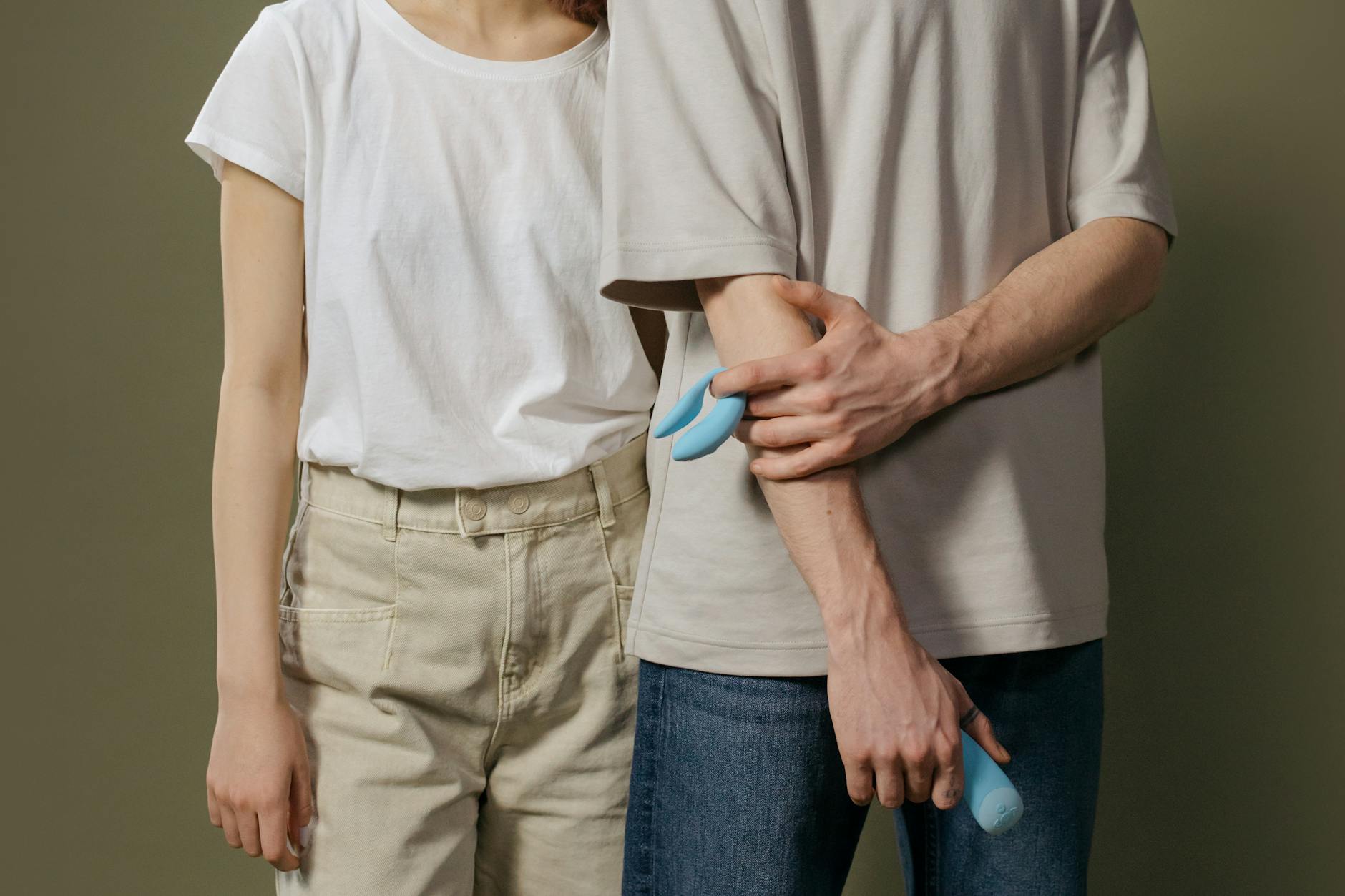
Let's be real about this one
You have a partner. You also want to use a vibrator alone. And you're wondering if that means something is wrong. It doesn't. It means you're normal, and you're smart enough to invest in your own pleasure instead of waiting for someone else to get it exactly right.
Here's what I've seen in my practice for two decades: couples who have thriving sex lives together often have the strongest solo practices too. Self-pleasure isn't a backup plan. It's information. It's how you learn what actually works for your body, what gets you there, and what rhythm your nervous system prefers. That knowledge makes partnered sex better, not worse.
The problem isn't solo play. The problem is pretending it doesn't exist and then resenting your partner for not being a mind reader.
Why solo pleasure matters in a relationship
I'm going to give you the clinical reason first, then the real reason.
Clinically: solo pleasure teaches your body autonomy. It builds your sexual confidence independent of your partner's performance or mood or schedule. It regulates your nervous system. It gives you accurate data about what your body needs, which you can then communicate.
The real reason: you deserve to know what feels good to you without negotiating it. You deserve pleasure that's entirely yours. And paradoxically, that selfishness makes you a better partner. When you're not resentful about unmet sexual needs, you show up differently in the relationship.
Most couples don't talk about this because we're culturally trained to believe solo sex is what you do when your partner isn't available. Wrong framework. It's what you do for yourself, regardless.
The conversation you need to have (and how to have it)
Let me start with what NOT to do: don't approach this as a confession or an ask for permission. Don't frame it as "I want to masturbate sometimes." Frame it as "I'm exploring what my body responds to, and I want to be transparent about it with you."
The difference matters. One sounds like you're asking forgiveness. The other sounds like you're sharing information.
Pick a time when you're both calm, fed, and not about to have sex. Say something like: "I've been thinking about how I can better understand what my body needs. I want to spend some solo time with a vibrator, and I wanted to tell you because transparency matters to me." That's it. You're not asking. You're informing.
Their reaction will tell you a lot. If they're curious, great. If they're hurt, that's worth exploring, but it's not your job to absorb that as a reason to stop. If they want to participate sometimes, negotiate that separately.
The key is not making your pleasure his job, and also not apologizing for having a body.
Why lemon clitoral vibrators work differently for solo play
When you're using a vibrator alone, you have control. You set the pace, the intensity, the duration. Most people solo play faster and with more focus than they do partnered sex. This is normal. The brain is less divided.
Lemon vibrators, like those from Hello Nancy, use suction stimulation rather than traditional vibration. This matters for solo play because suction creates a sealed, consistent sensation that's hard to replicate manually. It's also less numbing than buzzy vibrators if you use it for longer sessions.
What I tell my clients: a lemon vibrator gives you feedback. You can feel when something is working versus when you're just putting in time. That precision is valuable information for solo play.
Start on a lower setting. Many people solo are tempted to go straight to high intensity because they're task-focused instead of sensation-focused. Resist that. The goal isn't speed. The goal is knowing your own body.
Building a solo practice that doesn't feel weird
Three things I recommend:
Schedule it. This sounds unromantic. It isn't. Scheduling your solo time means you're honoring it as important, not squeezing it in at midnight when you're exhausted. Even once a week, forty minutes, same day. Your nervous system will start to anticipate it.
Make it boring-looking. Lock the door, yes. But don't make it a production. You don't need candles and a vision board. Comfortable clothes, a pillow, a vibrator, privacy. That's it. Ordinary pleasure is still pleasure.
Don't perform for anyone. This includes yourself. You don't have to orgasm. You don't have to finish. If it feels good for fifteen minutes and then you want to stop, you stop. The culture has trained us to believe sex ends in orgasm or it didn't count. Wrong. Some of my best solo sessions never reached orgasm. They reached something else: clarity, ease, understanding.
How solo play actually improves partnered sex
Here's the thing nobody tells you: partners can sense when you know your own body. Not in a creepy way. In a confident way. When you know what works for you, you don't ask your partner to figure it out. You guide them. You say "faster," "lighter," "here instead of there." That's less work for them and more pleasure for you.
Also, when you're regularly taking care of your own pleasure, you show up less resentful. You're not unconsciously angry that your partner doesn't initiate enough or doesn't last long enough or doesn't understand what you want. You've separated your pleasure from their responsibility.
I had a couple come in last year who were stuck in a pattern where the woman felt abandoned after sex. She'd orgasm and then feel alone while her partner recovered. Once she started solo play with a lemon vibrator, she realized the loneliness wasn't about sex. It was about something else entirely. Solo play gave her that clarity.
Managing your partner's emotions about solo play
Some partners will feel threatened. "Why don't you need me?" "Am I not enough?" This is often less about sex and more about feeling useful, needed, or valued.
Here's what I tell couples: solo play isn't about your partner not being enough. It's about you being more. You're expanding your own capacity for pleasure, learning, sensation. That makes you more alive in the relationship, not less.
If your partner is struggling, you can invite them into your exploration. Not as a performance. But as information-sharing. You can use a lemon vibrator together with the goal of learning what your body does under different circumstances. That can be bonding if both people approach it with curiosity instead of insecurity.
But also: you don't need their approval to know yourself. You do need their respect. Make that distinction clear.
When to use solo play as a reset
I recommend solo play with a lemon clitoral vibrator specifically when you're feeling disconnected from your own body. This happens after stress, after illness, after long periods of not prioritizing yourself. Solo play reorients you toward sensation. It says "your body still works, your pleasure still matters, you're still here."
It also works as a reset when partnered sex has become routine or obligatory. You're not using it to avoid your partner. You're using it to remember what good sensation feels like, so you bring that energy back to partnered play.
The bottom line
Your partner doesn't own your pleasure. You do. Using a lemon vibrator for solo play isn't a rejection of your relationship. It's an investment in yourself that happens to make your relationship better. The honesty, the self-knowledge, the confidence, the reduced resentment. That all shows up when your partner touches you.
Start the conversation. Be clear. Be kind but firm. And give yourself permission to know your own body fully. That's not selfish. That's healthy.
People also ask
Should I tell my partner I'm using a lemon vibrator alone?
Yes, eventually. You don't need permission, but transparency builds trust. The timing matters. Bring it up during a calm conversation, not during or right after sex. Frame it as self-knowledge, not as a problem with your relationship. Something like: "I've been exploring what my body responds to with a vibrator, and I wanted to be honest about it with you."
Will using a lemon clitoral vibrator solo make partnered sex less satisfying?
No. Actually the opposite. When you understand your own pleasure, partnered sex becomes better because you know what you actually want instead of guessing. You also feel less resentful when your partner doesn't automatically know how to satisfy you, because you're not relying solely on them for that satisfaction.
How often should I use a lemon vibrator for solo play if I have a partner?
There's no magic number. Once a week, once a month, once every few weeks. Whatever gives you information about your body without replacing partnered intimacy. I usually recommend enough frequency that you notice patterns in what works, not so much that you're choosing solo over connection. Think of it like exercise: you do your own thing to stay strong, but you also show up for your partner.
What if my partner feels threatened by my solo pleasure?
That's worth exploring together, potentially with a couples therapist. Their insecurity isn't your responsibility to manage by giving up self-pleasure. But their feelings are worth understanding. Often what looks like "threatened by a vibrator" is actually "afraid I'm not needed" or "worried about my own sexual performance." Those are separate conversations. You can be compassionate and still maintain your boundary.
Can I use a lemon vibrator during partnered sex too?
Absolutely. That's different from solo play, but it's equally valuable. Some partners find it hot, some feel self-conscious, some are neutral. Talk about it first. And keep your own pleasure separate from your partner's comfort level. If they're uncomfortable, you don't have to stop. You negotiate. "I want to use this sometimes. Let's figure out how that works for us."
How do I start a solo practice if I've never used a vibrator alone before?
Start small and slow. Pick a quiet, private time when you're not rushed or performance-focused. A lemon clitoral vibrator from Hello Nancy works well because suction sensation is different from what you might already know, so it feels genuinely novel. Begin on the lowest setting. The goal isn't to finish fast. The goal is to notice what your body does. If nothing happens for twenty minutes, that's fine. You're gathering information. Solo play is about process, not product.