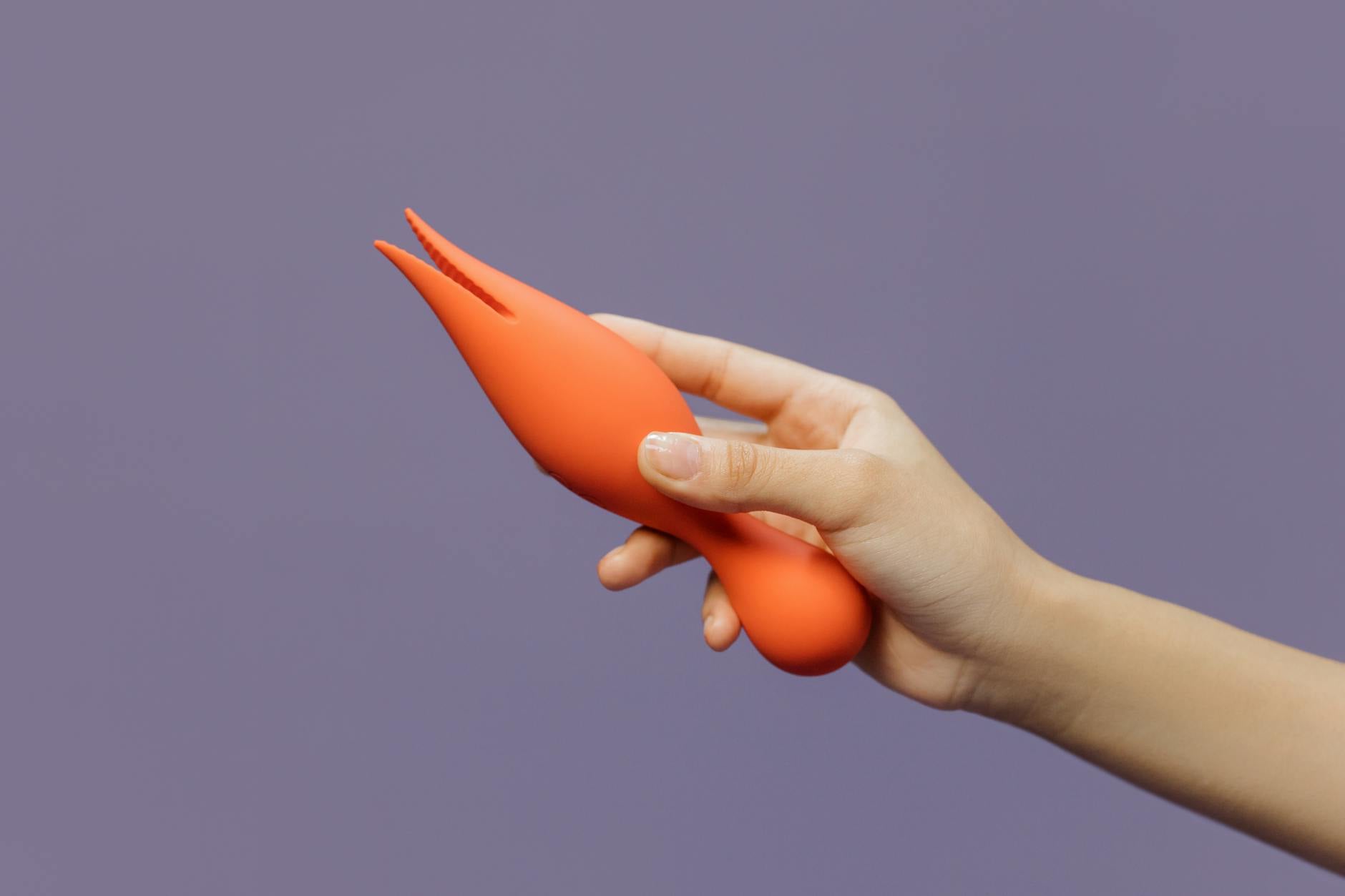
Here's the thing about introducing toys to a partner
You're probably nervous because you think introducing a lemon vibrator or any clitoral vibrator feels like criticism. Like you're saying "what you're doing isn't enough." It's not. What you're actually saying is "I want more pleasure, and I want us to explore this together." Those are completely different conversations.
The real friction isn't the toy itself. It's the silence around it. Once you actually talk, most partners move past the awkwardness in about ninety seconds.
Why the conversation matters more than the product
Lemon vibrators work brilliantly for partnered sex because suction stimulation doesn't require the same hand position as traditional vibration. That means your partner can use it on you while staying connected, while watching your face, while you're together in ways that feel different from solo play.
But none of that matters if your partner doesn't know you want to try it. Or worse, if they feel blindsided when you pull it out of a drawer.
The conversation isn't really about the toy. It's about signaling three things: my pleasure matters to me, I want to share this with you, and I trust you with this. Those are relationship-level signals that tend to ripple outward into other areas of intimacy.
Timing: when to have the conversation
Don't do it mid-sex. Don't do it right after sex when you're both tired. Don't do it when you're angry or during an argument about something else.
Do it when you're both clothed, alert, and have some privacy. A walk, a car ride, or a quiet evening at home works. The goal is a conversation, not a performance or a surprise.
Some people find it easier to bring up after they've been reading or learning about pleasure together. You could send your partner a Hello Nancy blog post, or mention an interview you heard about lemon clitoral vibrators. That creates a "we were already thinking about this" framing instead of a "I want this out of nowhere" one.
The actual words to use
Start with desire, not deficiency.
"I've been thinking about exploring more, and I found this thing called a lemon vibrator that I'm curious about trying with you." That's it. You're not saying your partner isn't doing enough. You're saying you want to try something new together.
If they ask why, be honest. "I read that the suction feels different than regular vibration. I want to see what it's like, and I'd rather experience it with you than alone." That's vulnerable and clear.
If they hesitate, don't defend the toy. Address the actual concern. Common responses:
"Will it replace me?" No. It's a tool, like lube or a different position. It does something different, and you want to try it.
"Does this mean I'm not enough?" It means you want more pleasure, which has nothing to do with how you feel about them.
"I feel weird about it." That's valid. Can you tell me what specifically feels weird? Sometimes it's just novelty. Sometimes it's deeper.
Listen more than you talk at this point. A partner who feels heard is more likely to be curious.
If your partner says no
Sometimes they will. They might not be ready. They might have different boundaries around toys in partnered sex. That's information, not rejection.
You have three options: wait and revisit later, explore solo play separately, or accept this isn't on the table right now. What you don't do is sneak it in or resent them for the boundary.
Many partners who initially said no became curious after their person tried solo play first. They see the pleasure their partner gets, and they want to be part of creating that. Others never want to use toys together, and that's okay too.
How to actually use lemon vibrators together
Once you've had the conversation and your partner is willing, the physical part is straightforward.
Start with foreplay as usual. When you're both aroused, introduce the lemon vibrator. Your partner can use it on you while you're both comfortable. The beauty of suction-based lemon clitoral vibrators is that your partner can position themselves differently than they would with traditional vibration. They can watch your face. They can use their other hand to touch you. They can be present in ways that feel more connected.
Walking your partner through what feels good is part of the pleasure for most people. "A little softer," "that spot," "yes, right there." That communication is intimate and practical.
Start with a lower suction level. Build from there. Most people don't want maximum intensity from the beginning.
Alter the pattern. Use it continuously, then rhythmically. Combine it with other touch. Your partner might enjoy this part almost as much as you do because they get real-time feedback on what's working.
If it feels awkward the first time
It probably will a little. New things feel strange. You're integrating something unfamiliar into an intimate experience. That's normal.
The difference between awkward and wrong is simple: awkward fades with repetition. Wrong stays wrong. If you're genuinely uncomfortable, or if your partner is genuinely uncomfortable, pause and talk about why. Sometimes it's just "that felt weird but I'm curious," which means try again. Sometimes it's "this doesn't feel right for us," which means something else.
But most of the time, the first time is a little clumsy and the second time is better and the third time you forget you were ever nervous.
Why this matters beyond the bedroom
Introducing a lemon vibrator to your partner isn't really about the toy. It's about building a relationship where you can ask for what you want. Where pleasure isn't a taboo subject. Where you can be vulnerable about desire and trust your partner to respond with curiosity instead of judgment.
That skill transfers everywhere. Once you can say "I want to try this sexually," you can say "I want to try this emotionally" or "I want to try this in our relationship." You've proven to yourself that asking for what you want doesn't destroy the relationship. It actually tends to deepen it.
Partners who explore pleasure together stay curious about each other. They ask more questions. They pay closer attention. They remember that the other person is complex and deserving of care. That's foundation work for long-term intimacy.
People also ask
Is it normal to want to use toys with my partner?
Completely normal. Research suggests that about 70% of people have used or want to use sex toys with a partner at some point. You're not the weird one for wanting this. You're the normal one who's actually talking about it.
How do I bring this up if my partner is conservative about sex?
Start smaller. Instead of leading with "I want to use a vibrator with you," try "I've been reading about ways we could explore more pleasure together." Frame it as about the relationship, not the toy. Some people who feel awkward about toys warm up faster when they understand that integrating a lemon vibrator is an act of deepening intimacy, not introducing a third party.
What if my partner feels threatened by the toy?
That's a legitimate feeling, and it's worth exploring gently. Ask what specifically feels threatening. Is it that they're worried the toy will replace them? Reassure them it won't. Is it that they feel inadequate? That's actually about their own vulnerability, not about you or the toy. Sometimes couples therapy or sex-positive counseling helps partners work through these feelings so they can move toward curiosity.
Can I use a lemon vibrator during penetrative sex with a partner?
Yes, depending on the position. Many people use lemon clitoral vibrators during penetration. Some positions (like missionary or spooning) allow your partner to hold the vibrator against your clitoris while being inside you. The key is communication about angles and comfort. Start slowly and adjust as needed.
What if I'm in a long-distance relationship or can't be physical?
You can absolutely have conversations about pleasure and desire even if you're not together physically. Some couples explore together virtually. Some talk about what they'd do. Some use it as foreplay for when they reconnect. The conversation itself builds anticipation.
How do I know if my partner is actually okay with it or just going along?
Watch for genuine curiosity, not passive compliance. A partner who's okay with it will ask questions, want to know what you're feeling, maybe even suggest variations. A partner going along will be quiet and compliant and somewhat relieved when it's over. If you sense the latter, pause and ask directly. "Are you genuinely interested, or did you agree just for me?" Sometimes people need permission to say no. Give them that.
The bottom line
Introducing a lemon vibrator to your partner is simpler than the anxiety around it suggests. You're asking for more pleasure and more connection. That's not threatening. It's generous, actually. You're inviting them into something that matters to you.
Start the conversation. Listen to their response. Work together from there. If they're curious, you get to explore something new as a couple. If they're hesitant, you get to understand them better. Either way, you've shifted the relationship toward greater honesty.
And that always matters more than the toy.
Have questions about how to talk to your partner about pleasure, toys, or intimacy? The team at Hello Nancy is here to help. Get in touch.