The real problem with this conversation
Here's what usually happens. One partner mentions wanting to try a vibrator. The other hears it as criticism: "You're not enough." Defensiveness kicks in. The conversation stalls. Sex becomes awkward. No one brings it up again for six months.
The problem isn't that vibrators are inherently threatening. The problem is that most of us were never taught how to ask for what we want in bed without it sounding like we're saying our partner has failed us. So we either don't ask at all, or we ask badly, and then we're both stuck.
Why your partner might actually be nervous
People carry a lot of baggage about toys. They worry it means you're not attracted to them anymore. They're anxious that they're not "enough." They wonder if you've been fantasizing about someone else. They might feel embarrassed about their own body or sexual capacity.
None of this is logical. None of it is your fault. But it's real, and pretending it isn't there won't help.
The best thing you can do before you have this conversation is understand where they're starting from. Have you noticed them being insecure about anything sexual? Have they mentioned feeling like they're not good at sex, or that you're hard to please? That's the nervousness you need to address, not the vibrator itself.
The framework: separate the three conversations
Most couples fail at this because they try to have one conversation when they're actually having three.
Conversation One: Desire. "I want to explore something new together. I'm attracted to you, and I want to feel closer to you in this way."
Conversation Two: The tool. "I've read about this thing called a lemon clitoral vibrator, and I think it could help us. It's not about replacing you. It's about adding something."
Conversation Three: Logistics. "Here's what I'm thinking. We don't have to jump into using it tomorrow. We could just look at it together first. No pressure."
Most people smoosh all three into one sentence and then wonder why their partner feels attacked. Separate them. Give each one time and space.
How to start the conversation (the actual words)
Picka calm moment. Not right before bed. Not right after you've had less-than-stellar sex. Just a regular evening when you're both relaxed.
"I've been thinking about us and sex, and I want to talk about something. Not because anything's wrong. But because I want more."
Stop there. Let them respond. They might say "More what?" or "More often?" or they might get defensive immediately. Either way, you've opened the door gently.
Then: "I've been reading about how lemon clitoral vibrators work, and I think it could feel really good for me. I'm not saying anything's missing with you. I'm saying I want to explore this together."
That word "together" matters. You're not asking them to leave the room. You're asking them to be part of it.
What to do if they shut down
If they say "I don't know about that" or "That feels weird" or "Why would you need that," don't argue. Don't defend. Don't double down.
Instead: "I hear you. It's not your thing right now, and that's okay. But can I ask what feels off about it?"
Listen. Actually listen. Don't interrupt to explain why they're wrong. You're gathering data about what the real concern is. Is it feeling like they're not enough? Is it about vulnerability? Is it a religious or cultural thing? Is it just the newness?
Once you know what they're actually worried about, you can address that. If they're worried you want it because they're not satisfying you, you say: "That's not true. I'm really attracted to you. This is about curiosity and pleasure, not about fixing something broken."
If they're worried about it being weird or fake, you say: "I get that. But plenty of people use these, and they love them. Would it help to talk about why it interests me specifically?"
The no-pressure introduction
Once they've softened, even slightly, here's how you move to the next step.
"What if we just looked at one together? No commitment. No timeline. Just to see what you think."
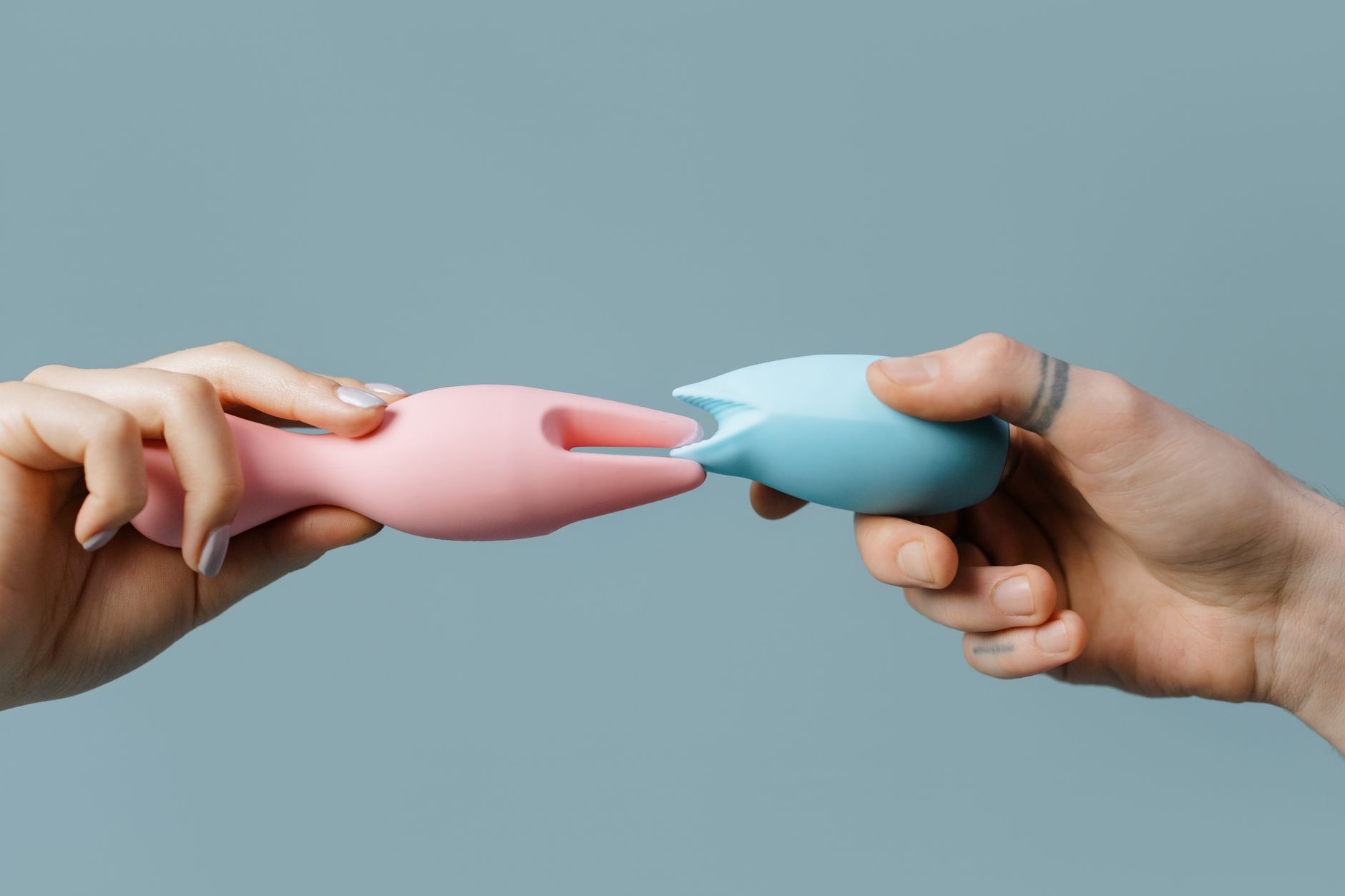
Let them hold it. Let them see that it's small, sleek, not intimidating. For a clitoral vibrator like the Lem, which is designed with suction rather than intense vibration, you can explain that it feels gentler and more like a partner's touch than older-style vibrators.
Honestly, seeing it and holding it does half the work. It's not mysterious anymore. It's just an object.
"This one's called a lemon clitoral vibrator. The thing about these suction-style toys is they don't numb you out the way regular vibrators sometimes do. They actually feel more like... well, like skin."
Then give them control. Ask them what they notice. Do they think it's pretty? Does the weight feel okay in their hand?
When to actually use it together
Don't rush this. You can look at it on a Tuesday and not use it until the following week. Or the week after. This isn't a race.
When you do move toward using it, frame it as exploration for both of you. "I'd like to try this when we're together next. But we can go slow. If it feels weird, we stop. No judgment."
Then, when you're actually in the moment, start without it. Have your normal foreplay. Build arousal the way you usually do. Then, once you're already turned on, introduce the lemon vibrator. Use it on yourself first, so your partner can see you enjoying it. That's actually the moment most partners relax. Seeing you feel good makes them feel less threatened.
After a few times, they might want to hold it. Or they might want to use it on you while you're with them. The dynamic shifts once they stop seeing it as competition and start seeing it as something that makes you happy.
The conversation if they say no, and they stick with no
Sometimes your partner won't budge. They're just not comfortable with it, and that boundary is firm.
First: respect that. You can't force someone into sexual exploration they don't want.
But also ask yourself: is this something you need for your own pleasure? Because there's a middle ground between "we do this together" and "you can never do this."
You might say: "I respect that this isn't something you want to do as a couple. But I'd like to explore it on my own sometimes. Is that something you're okay with?"
Some partners will still say no. And then you have a bigger conversation: how do you both get your needs met? Do you need to see a couples therapist to work through this? Is there a compromise that works?
But most partners, once they see that you're not asking them to participate, will relax. It becomes less about threat and more about "okay, my partner has a thing that makes them feel good, and that's fine."
What changes after you've introduced it
Once vibrators are on the table, you'll probably notice something shift. Not necessarily in how often you have sex, but in how you talk about sex. You've had the awkward conversation and survived it. Other conversations become easier.
Your partner might eventually want to try it, or they might not. But the fact that you can name desire out loud, without shame or defensiveness, changes everything else. You can talk about what you like and don't like. You can ask for things. You can hear each other.
That's actually what the vibrator is for. Not the orgasm. The honesty.
FAQ
What if my partner thinks vibrators mean I'm cheating or fantasizing about someone else?
This is the "not enough" anxiety in disguise. Your job is to separate the fantasy from the tool. You're not fantasizing about a person. You're exploring a sensation. It's completely possible to want both the intimacy with your partner AND the specific sensation a clitoral vibrator provides. Those aren't in conflict. A good response: "I want you. And I want to feel this too. Those things can both be true."
Should I bring up vibrators when things are going badly, or when things are going well?
Neither. Bring it up when things are calm. Not in the middle of a fight or a drought, and not right after great sex when your partner might feel like you're asking for more than they just gave. A random Tuesday evening works. Saturday morning coffee. Neutral ground.
What if we're new to each other and we haven't even talked about much sexually yet?
Wait longer. You need some sexual baseline first. Get comfortable being vulnerable with each other about what you like and don't like before you introduce new tools. If you're still in the honeymoon phase, you probably don't need to yet anyway.
Can I just buy one and leave it on the nightstand as a hint?
No. This will backfire. Your partner will feel ambushed, and they'll have no way to have a feelings conversation about it. It needs to be a conversation first. The toy comes after the yes, not before.
My partner said they'd try it but seem really uncomfortable when we get close to using it.
Pull back. No pressure. Let them come to it on their own timeline. You might say: "I notice you seem hesitant. We don't have to do this." Often, hearing that you're willing to drop it makes them more willing to try it. Pressure kills arousal.
How long does it usually take before partners are actually okay with vibrators?
It varies wildly. Some people are in by the second conversation. Some take months or years to warm up. Some never do, and that's their right. The timeline doesn't matter. What matters is that you both feel heard.
Should I use a lemon clitoral vibrator or a different kind?
Lem vibrators and other lemon clitoral vibrators are a great option for this conversation because they're quieter, less intimidating-looking, and use suction rather than intense vibration. They feel more sensual than mechanical. For a partner who's already nervous, that gentleness is actually an asset. But really, the specific toy matters less than the fact that you've had the conversation first.
What if they want to use it but I'm the one who gets nervous?
That's fair. Your feelings are valid too. You might worry about pleasure dynamics, or about whether it changes your relationship. Talk about that. Use the same framework. Separate the three conversations. Go slow. There's no timeline.
The bottom line
Introducing vibrators to your partner isn't about the toy. It's about your willingness to ask for what you want and their willingness to listen without defensiveness. That conversation, done well, is what actually improves your sex life. The lemon clitoral vibrator is just the catalyst.
If you want help working through this with your partner, or if you're stuck in the defensive pattern where these conversations never go anywhere, that's also a reason to see a couples therapist. They can help you practice the vulnerability and listening this kind of conversation requires. Your sex life is worth that investment.