The honest truth: this is a body-specific question, not a product question
Let's start with the thing everyone gets wrong. People ask "which is better" like there's an objectively correct answer. There isn't. A lemon clitoral vibrator and a wand vibrator are fundamentally different tools that do different things. Picking one means understanding what your body needs right now, not what the internet says you should want.
I work with couples and individuals on intimacy every week, and the most common regret I hear isn't "I bought the wrong toy." It's "I didn't know what I actually wanted when I bought it." This guide is designed to help you skip that.
What a lemon vibrator actually does (and doesn't)
A lemon clitoral vibrator, like Hello Nancy's Lem, uses pulsing suction combined with subtle vibration. It doesn't vibrate in the traditional sense. Instead, it creates a gentle pressure-release pattern that draws on sensitive tissue without direct percussion. Think of it as a sustained, rhythmic hug rather than buzzing.
This matters because suction changes the mechanics entirely. Your clitoris has an internal structure that most people never see in school diagrams. When suction engages it, it activates different nerve pathways than vibration does. The stimulation feels more concentrated, often deeper, and for many people, more likely to build into a full-body response.
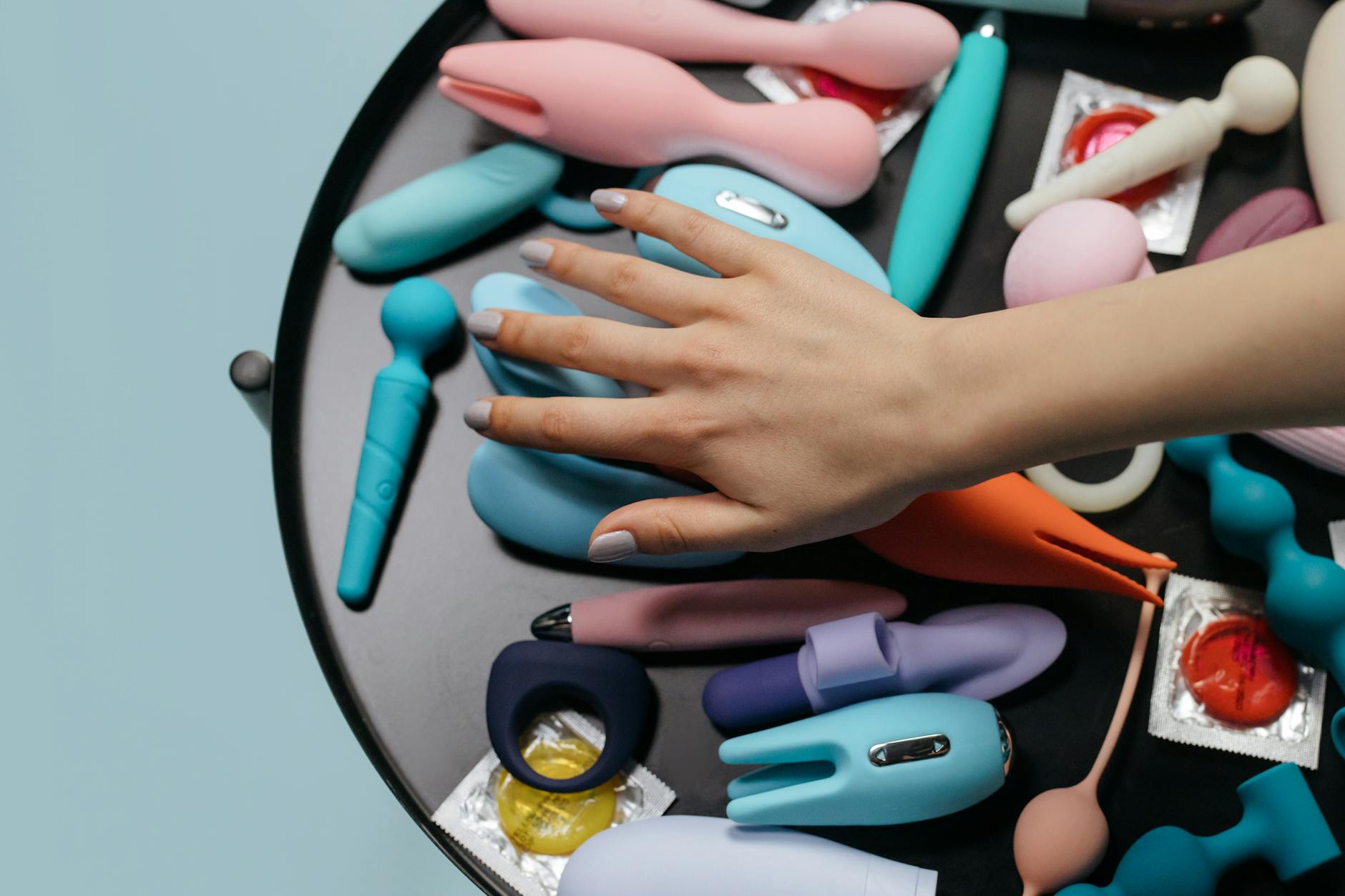
Wand vibrators, by contrast, deliver consistent vibration across a broader surface area. They're typically larger, covered in silicone, and designed to be held against the clitoris or surrounding vulva. The vibration pattern is consistent and strong, which makes them excellent for people who like intensity and directness.
Sensitivity: the actual deciding factor
Here's where most guides get vague. Let me be specific.
If your clitoris feels oversensitive, raw after stimulation, or if direct vibration makes you want to jump out of your skin, a lemon vibrator is usually the better choice. The suction approach is gentler and more forgiving on sensitive tissue. It gives you control through positioning and pressure without the constant buzzing that can feel overwhelming.
If your clitoris feels somewhat desensitized, if vibration has stopped working, or if you need strong, relentless stimulation to feel anything, a wand is typically your move. The broad coverage and consistent vibration work well for bodies that need more input to register pleasure.
There's also a middle ground. Some people prefer a lemon vibrator for solo sessions (where they can focus entirely on sensation) and a wand when partnered (where the broader surface area allows easier access and less positioning fiddling). That's completely valid.
Duration and comfort: the second factor
How long do you actually want to spend? Be honest.
A lemon vibrator encourages longer sessions. Because the stimulation is less intense initially, you can comfortably use it for 15 to 40 minutes without fatigue or overstimulation. Many people find the sensation actually gets better as they warm up and learn the rhythm.
A wand is often a faster route. The intensity means you're working toward climax relatively quickly. If you've got 10 minutes and you want to get there, a wand is your friend. If you want to linger, explore, and build slowly, a lemon vibrator rewards that attention.
There's also an ergonomic piece. Wands are larger and heavier. If you have arthritis, limited grip strength, or just prefer something you can hold with minimal effort, a lemon vibrator's compact design is a genuine advantage. You can use it for extended time without your hand cramping.
Positioning and access
Wand vibrators work best when pressed firmly against the clitoris or surrounding area. That means you need leverage, a stable position, and often a partner's cooperation if you're using one together. In certain positions, they're awkward or impossible to position correctly.
Lemon vibrators are smaller and more maneuverable. You can reposition it constantly, angle it differently, explore the edges of sensation. Solo, this is freeing. With a partner, it's easier to use during penetration or other activities without it being in the way.
If you're someone who likes variety within a single session, or if you want a toy that works across multiple scenarios (solo, partnered, during sex), the lemon clitoral vibrator's flexibility is an asset.
The build and the curve
How your arousal actually builds matters.
Wand vibrators tend to create a sharp trajectory. You feel nothing, then gradually more, then it kicks. Some people love that clarity. Others find it jarring.
Lemon vibrators, especially Hello Nancy's Lem, tend to create a slower climb. The sensation builds more gradually. For many people, that creates the conditions for more intense orgasms because your nervous system has time to fully engage. You're not racing to the finish. You're actually arriving.
This is especially true for people who've been using traditional vibrators for years. The suction approach can actually restore sensation that's been dulled by constant high-intensity vibration.
Noise and discretion
Let's be practical. Wand vibrators are loud. They're not subtle. If you live with other people, if thin walls are a reality, or if you just want to be discreet, that matters.
Lemon vibrators are significantly quieter. The suction mechanism is nearly silent. If noise is a real concern for you, this is a genuine advantage.
Partner dynamics
If you're using a toy with someone else, the tool changes the experience.
A wand is easy for a partner to learn and control. It's intuitive. It leaves space for connection because neither of you is getting too caught up in figuring out mechanics.
A lemon vibrator has a learning curve. A partner needs to understand positioning, pressure, and the subtle responsiveness of suction. That's not a bad thing. Many couples find that learning together deepens intimacy. But it requires patience and communication that not everyone wants to invest upfront.
If you're introducing a toy to a partner for the first time, understanding their comfort level with that learning process matters.
Price and investment
Wand vibrators range widely, but many solid options fall in the $40 to $80 range. Lemon vibrators, like the Lem, are typically $80 to $90. If budget is tight, a wand might be the starting point. If you're willing to invest more upfront for a toy you think will work longer term, a lemon vibrator makes sense.
Neither is inherently better value. That depends on whether you'll actually use it.
How to actually decide
Honestly evaluate these four questions.
1. On a scale of one to ten, how sensitive is your clitoris right now? If you're 8 or higher, lemon vibrator. If you're 4 or lower, wand. Five to seven means you could genuinely go either way.
2. How much time do you realistically have and want to spend? Less than 15 minutes regularly? Wand. More than 20? Lemon. Variable? Lemon wins because it's more flexible.
3. Are you buying this solo or with partner input? Solo, you can experiment. With a partner, consider their comfort with learning a new technique.
4. What's your recent history with vibrators? If traditional vibrators have stopped working, a lemon vibrator is often the reset button. If you've never used one and want something straightforward, a wand is fine.
Your pleasure doesn't come from the toy. It comes from knowing what your body actually needs and giving yourself permission to get it.
The practical next step
If you're still genuinely unsure, start with whichever you're more curious about. Curiosity is data. If a lemon vibrator intrigues you, that curiosity probably means your body is ready for something different. Same with a wand.
Most importantly, give yourself permission to be wrong. You might buy a lemon vibrator and realize after two months that a wand is your actual preference. That's not a waste. That's learning. Many people end up with both because they serve different purposes.
Your pleasure matters. The tool you pick should match your body, your timeline, and your actual life. Not what anyone else tells you is "better."
Common questions about choosing between them
Can I use a lemon vibrator if I've never had an orgasm from a vibrator before?
Absolutely. For some people, lemon vibrators are actually easier to respond to than traditional wands because the sensation is less overwhelming. The suction approach engages your nervous system differently. If wands have felt too intense or too numb in the past, a lemon vibrator might be the key.
Do I need to use lubricant with a lemon vibrator and not with a wand?
Not necessarily. You don't need lubricant with either toy. That said, lube can enhance sensation with a lemon vibrator by creating better seal and allowing the suction to work more smoothly. With a wand, lube is optional. Some people like it for smoother contact. Others prefer direct contact. Your preference rules here.
Will switching from a wand to a lemon vibrator reset my sensitivity?
Maybe. If your clitoris has been overstimulated by years of strong vibration, switching to a suction-based tool can actually help restore sensation. That said, the reset doesn't happen instantly. It usually takes 2 to 4 weeks of regular use with the new tool to really notice the difference.
Can my partner use a lemon vibrator on me during sex?
Yes, but it requires positioning. Because it's smaller, it can work during penetration in ways a wand can't. That said, the partner does need to understand how to use it. It's not as intuitive as a wand, so communication matters more.
Which one is quieter?
Lemon vibrators are significantly quieter. If discretion matters to you, that's a real advantage.
What if I want to start with something less expensive?
You're not obligated to go expensive. A solid wand vibrator under $70 will give you plenty of data about what your body responds to. Once you know your preferences, you can upgrade or try a lemon vibrator. There's no shame in starting smaller.
Final thought
Neither of these tools is a magic fix. But the right tool, matched to your body and your actual life, makes everything easier. That's not hype. That's just how tools work.
If you want more guidance on picking your first device or comparing specific options, our buying guide has detailed comparisons. And if you have questions we haven't answered, reach out to us. We're here to help you get this right.