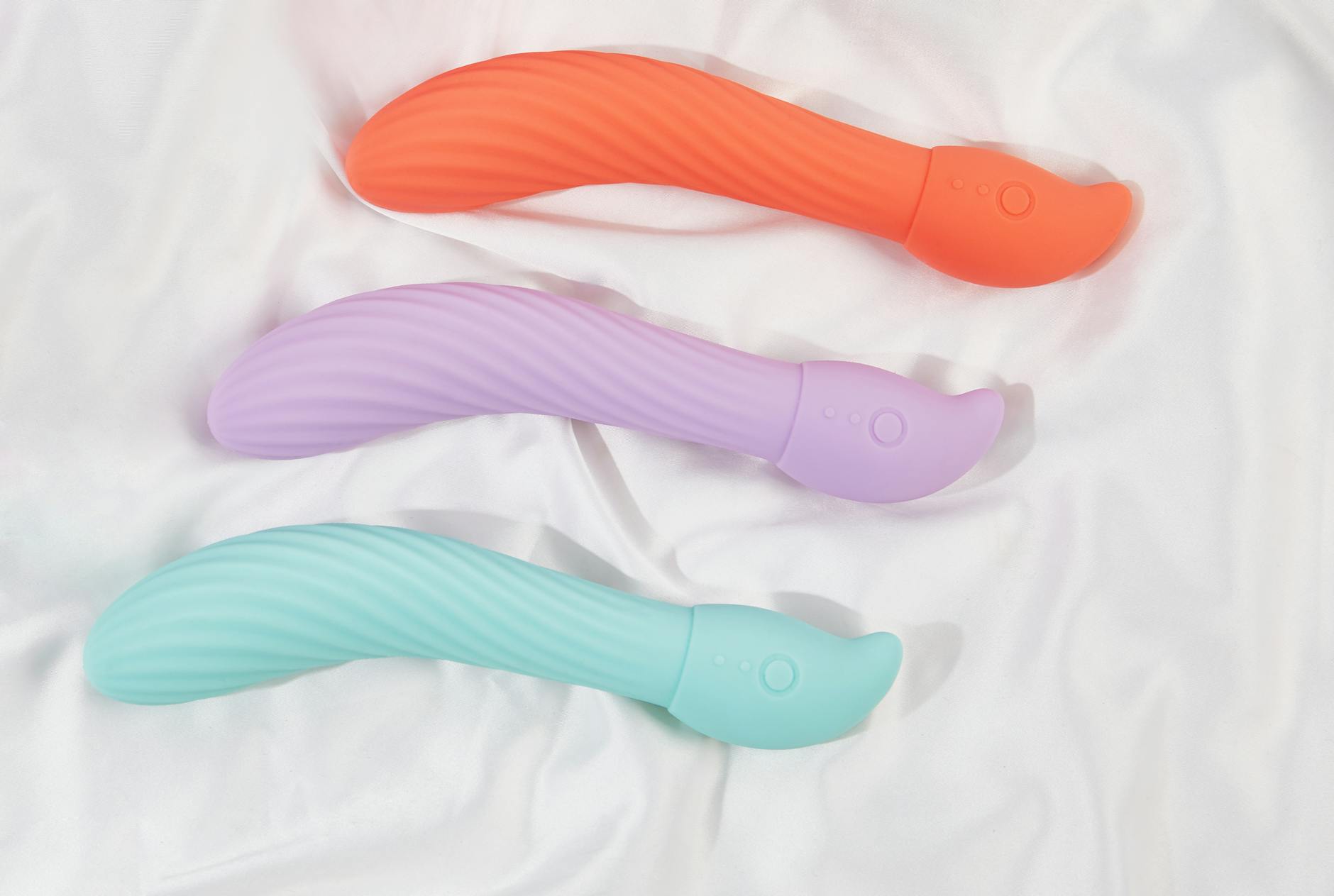
Let's talk about what nobody warns you about
You switch birth control and suddenly something feels off. Not broken, just different. Your desire dips, sensation feels muted, or arousal takes twice as long to build. Then you spiral wondering if it's the pills, the relationship, stress, or if you've just lost your edge. Here's what's actually happening: hormonal birth control rewires arousal sensitivity at a physiological level, and lemon vibrators are one of the best tools for recalibrating it.
This isn't about fixing something wrong with you. This is about understanding the mechanism and knowing you have options.
How birth control changes arousal at the physical level
When you start hormonal birth control, your body's natural testosterone and estrogen cycles pause. Testosterone is a major driver of desire in everyone with ovaries, not just testosterone-dominant bodies. Birth control suppresses it.
At the same time, synthetic hormones increase sex hormone binding globulin (SHBG), a protein that binds to the testosterone that's circulating and makes it unavailable to your tissues. The result: lower desire, quieter clitoral response, and reduced lubrication. Some people also experience numbing sensation, almost like their clitoris is there but muted.
Here's the kicker. Even if you stop the medication, the rewiring doesn't reverse overnight. Your nervous system has adapted to lower arousal signals for months or years. Your brain has learned to expect a softer response. Rebuilding sensitivity takes active practice, not just time.
Why lemon vibrators work differently for post-birth-control bodies
Traditional vibrators use rapid oscillation, which requires your nerves to be already primed and reactive to pick up the signal. If your clitoral sensitivity has been dampened by birth control, that buzz can feel like nothing at all. You need more intensity, which leads to fatigue and frustration.
Lemon clitoral vibrators use suction and pulsing rather than vibration. This mimics the sensation of oral stimulation at a deeper level, activating different nerve pathways than surface vibration does. For desensitized tissue, that distinction matters wildly.
The suction creates sustained pressure and release cycles, which your nervous system can detect even when overall sensitivity is lower. You're not asking your clitoris to respond to a tiny buzz. You're creating a rhythm it can follow and build on. That's the entry point back to arousal.
The adjustment timeline you should expect
First session with a lemon vibrator after birth control numbing: you might feel something, or you might feel almost nothing. This is normal and temporary.
Weeks two through four: your body starts to recognize the pattern. Sensation builds gradually. You may need longer warm-up time (15-25 minutes, not five), and that's fine. You're rewiring a nervous system.
Weeks five through eight: most people report arousal building faster, orgasms returning with more intensity, and pleasure feeling less muted overall. Some describe it as "waking up" after being asleep.
After eight weeks: the real change happens. You're not just regaining baseline sensation. Many people find their arousal is sharper than it was before birth control, because they're approaching pleasure intentionally rather than on autopilot.
The practical setup that makes this work
Patience with settings matters. If you're starting a lemon vibrator after birth control sensitivity loss, begin at the gentlest pattern (usually level 1 or 2) and stay there for at least five sessions. Your instinct will be to turn it up because you feel nothing. Resist that. You're not broken; you're just giving your nerves time to relearn the sensation.
Lubrication helps, even though you might not think you need it. Water-based lube reduces friction and makes suction feel more comfortable, which lets you relax and actually receive the stimulation. Relaxation is how sensitivity returns.
Timing matters too. Ovulation is when testosterone naturally spikes even on birth control, so arousal tends to be easier mid-cycle. If you're rebuilding, schedule solo practice sessions for that window. You'll have faster success, which builds confidence and motivation.
The emotional piece nobody mentions
Sometimes the arousal loss tied to birth control gets tangled up with relationship stuff. You've been numb for months. Your partner has internalized that as rejection. Now both of you are carrying resentment. The physical desensitization becomes a metaphor for emotional distance.
Rebonding with your own pleasure separately, on your own terms, defuses that. When you spend four weeks exploring sensation alone with a lemon vibrator and rediscovering what turns you on, you're not doing it to "fix" the relationship or perform desire. You're gathering evidence that your body works, that pleasure is available to you, and that you have agency. That confidence changes how you show up with a partner.
When to switch birth control methods entirely
If sensitivity loss is severe and hasn't budged after two months of consistent lemon vibrator use, it might be time to talk to a doctor about a different formulation or method altogether. Some people do better on lower-dose pills. Others switch to the IUD, which has no systemic hormones and many report arousal returning within weeks.
Non-hormonal methods like copper IUDs, condoms, or cycle syncing exist too. Birth control numbing arousal is real, and it's not a character flaw. Millions of people experience it. A good gynecologist will take it seriously.
The compounding benefit: lasting arousal recovery
One thing I've noticed working with people rebuilding arousal after birth control: the skills you develop with a lemon vibrator stick around. You learn to notice smaller sensations. You rebuild trust in your body's responsiveness. You practice patience with pleasure instead of demanding instant results.
Those skills transfer. When you go back to partnered sex, you bring that skill set with you. You know how to ask for longer foreplay. You know which sensations wake you up. You're not waiting for someone else to generate desire; you're bringing it to the table yourself.
The lemon clitoral vibrator isn't the answer. You are. The vibrator is just the tool that reminds your nervous system what's possible.
FAQ: Birth Control, Arousal, and Lemon Vibrators
Can I use a lemon vibrator while still on birth control?
Absolutely. In fact, many people do this as a workaround for diminished arousal while staying on their current method. The lemon's suction mechanism bypasses the desensitization problem by activating different nerve pathways. Some people use it as a bridge until they find a birth control method with fewer side effects, or as a permanent addition to their solo or partnered routine.
How long after stopping birth control does arousal come back naturally?
Variability here is huge. Some people feel desire return within weeks. For others it takes three to six months. The hormones leave your system quickly, but your nervous system's learned responses take longer to reset. Lemon vibrators speed this up because you're actively retraining sensation rather than passively waiting.
Is sensation loss from birth control permanent?
No. It's neuroplastic, meaning your nervous system can rewire. The longer you were on the medication, the longer recalibration may take. But permanent? Not clinically. People regularly recover full arousal and orgasmic response after birth control by using consistent stimulation with tools like lemon clitoral vibrators.
Should I use a lemon vibrator solo or with a partner during recovery?
Start solo. You need to rebuild the signal without the pressure of performing or someone else's timing. Once you've had consistent solo sessions and feel arousal returning, partnered exploration can begin. Some couples find it helps to use a lemon vibrator together as foreplay, so the partner sees that arousal isn't about them, it's about your body recalibrating.
Does switching birth control methods help faster than vibrators?
They work best together, honestly. Switching to a lower-hormone method or non-hormonal option removes the underlying cause, but your nervous system still needs retraining. Adding a lemon vibrator accelerates that retraining significantly. Many people switch methods and use vibrators in tandem, recovering within two to three months instead of six.
Can lemon vibrators help if my partner's birth control killed their arousal?
Yes. If your partner is experiencing desire loss from their birth control, supporting them in exploring a lemon vibrator solo gives them the time and safety to rediscover sensation without performance pressure. Some couples also use lemon vibrators together during foreplay, which can help both partners feel less blame or resentment about the arousal shift. It becomes a shared tool instead of proof that something's wrong.
The path forward
Birth control arousal loss is real, measurable, and fixable. It's not your imagination. It's not about your relationship or your attractiveness. It's hormones suppressing a biological signal that your nervous system learned to expect. And once you understand that mechanism, you can work with it.
Lemon clitoral vibrators offer a specific advantage here because they engage sensation pathways that standard vibration doesn't reach. They're not a magic fix. Consistency is. But combined with patience, lube, and time, they're genuinely one of the fastest routes back to feeling like yourself again.
Your arousal is worth reclaiming. Your pleasure matters. And your body remembers how to respond when you give it the right kind of attention.
If you're navigating birth control changes or other shifts in sensation, we're here to help. Reach out anytime.