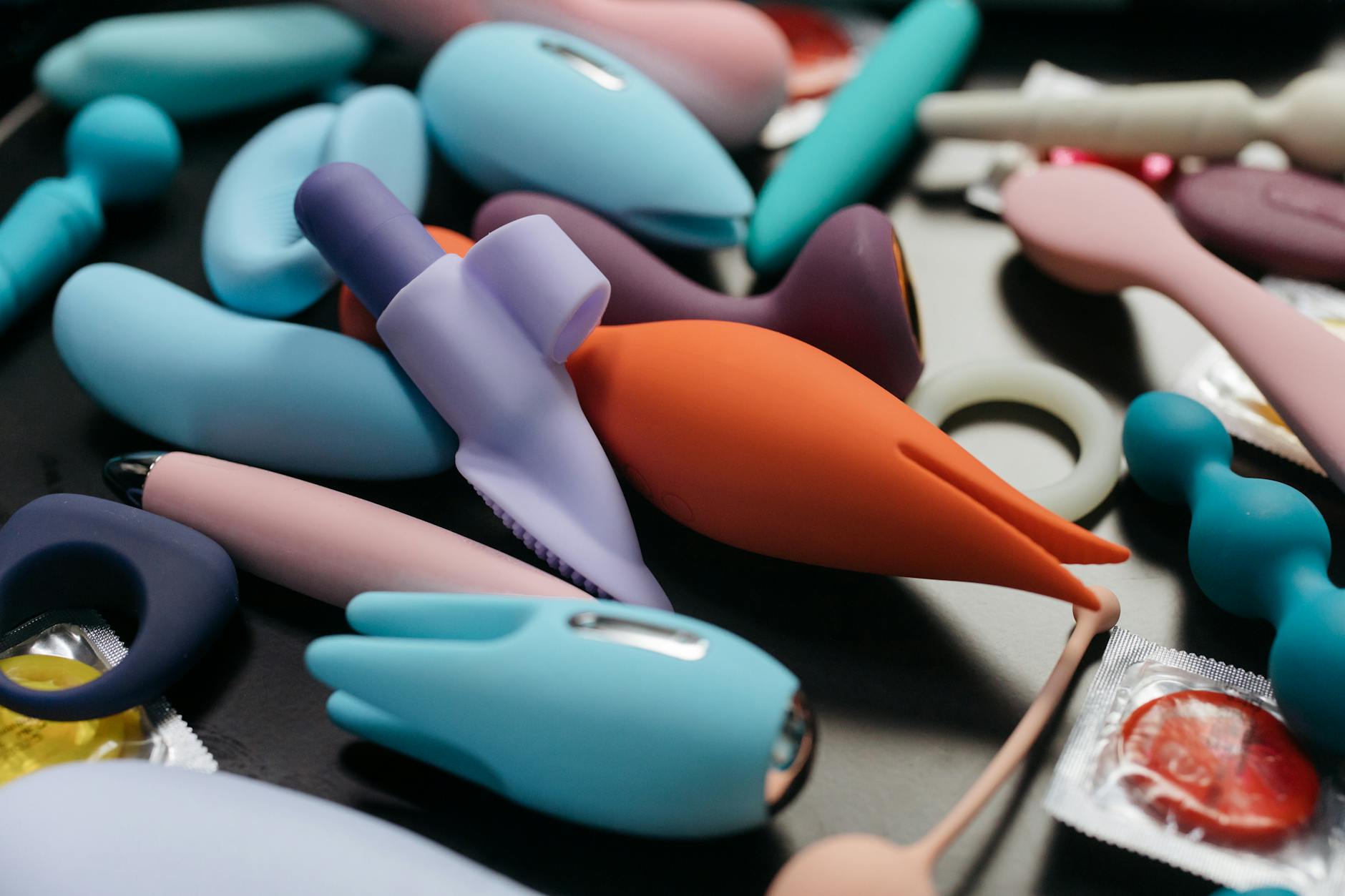
Does Clitoral Suction Feel Different After Hormonal Changes?
Honestly though, yes. And the shift is bigger than most people realize.
When your hormones change, your clitoris doesn't get smaller or disappear. But the tissue surrounding it does shift. Thinner, more sensitive, sometimes less responsive to the kind of direct friction that worked brilliantly at 25. The nerve endings are all still there. The capacity for pleasure is intact. But the mechanics of how stimulation reaches those nerves changes in ways that matter for how you choose your tools.
Here's what actually happens, and why suction based lemon vibrators suddenly make way more sense than the vibrator you've been using for years.
The tissue changes nobody warns you about
When estrogen drops, the clitoral complex doesn't stay the same size. The glans (the tip, the most sensitive part) can become more delicate. The skin thins slightly. Blood flow patterns shift. This isn't damage. It's a real physiological change that shows up in how stimulation feels.
I've had clients describe it like this: "That vibrator used to feel amazing. Now it feels like someone's tapping my arm with a pencil while I'm trying to concentrate." That's not the vibrator's fault. It's that the tissue composition has changed enough that the frequency that once worked is now either too intense or missing the sensation entirely.
The clitoris has between 8000 and 10000 nerve endings. Hormonal changes don't delete them. But they do change the depth and sensitivity of the surrounding tissue, which changes how effectively external vibration reaches those nerves.
Why suction works differently when tissue shifts
Traditional vibrators create sensation through sheer speed. They oscillate back and forth at high frequency, usually 3000 to 5000 vibrations per minute. That works great when the tissue is thick enough to absorb some of that micro-friction without irritation.
Clitoral suction, like what you get from lemon adult toys, works through a completely different mechanism. Instead of friction, it creates gentle pressure waves and negative pressure that pulls blood into the clitoral tissue. This has several advantages when hormones shift:
1. It doesn't require thick tissue to feel intense. A suction sensation can feel incredibly powerful even against thinner, more delicate tissue because it's not creating friction. The mechanism is different.
2. It distributes pressure more broadly. Instead of the small contact point a vibrator creates, suction engages a wider area, which means the sensation is less likely to feel sharp or overwhelming on sensitive skin.
3. It works with your natural arousal cycle instead of against it. Suction builds sensation gradually as your body responds. Traditional vibrators deliver the same input regardless of your arousal state.
Many clients tell me that after hormonal changes, suction based lemon vibrators feel less aggressive than the vibrator they loved for a decade. That's because they're not creating the same kind of micro-friction. The sensation is different. For a lot of people, it's not just different, it's better.
The arousal timeline shift
Hormonal changes don't just affect tissue. They affect how quickly arousal builds. Most people don't realize this until they're living it.
Pre-hormonal shift, arousal might build to peak in 5 to 10 minutes. After hormonal changes, 15 to 25 minutes is more typical. That's not a problem. It's just information.
Here's why it matters for choosing your tool: a traditional vibrator that requires you to be at a certain arousal level to feel good becomes frustrating if it takes longer to get there. You're fighting against the tool instead of working with it. Clitoral suction, because it works with pressure and blood flow instead of micro-friction, actually helps build arousal more gradually. The sensation is more conducive to that slower ramp up.
What changes in sensation intensity
I need to be clear about something: hormonal changes don't mean you stop being able to have intense sensation or orgasms. You don't lose that capacity. But the input required to reach the same intensity often changes.
Some people find that the clitoris becomes more sensitive overall. Others find that it requires more sustained stimulation to reach the same peak. Both are normal. Both can coexist in the same person depending on the day, stress level, and what else is going on.
This is where a lot of people get frustrated with their old vibrator. They assume their body is broken. They assume pleasure is fading. Sometimes what's actually happening is simpler: the tool that was perfectly calibrated for your pre-hormonal body doesn't match your post-hormonal body anymore. It's not tragedy. It's a gear change.
Lem vibrators and other clitoral suction lemon sexual toys often work better in this phase because the intensity is less dependent on your exact arousal state. You're not racing against a vibration that demands you be at a certain readiness level. The sensation is more forgiving.
Pattern matters more now
When tissue shifts, the patterns your clitoris responds to can shift too. Some people find that they prefer sustained suction over patterns. Others discover that gentler alternating pressure works better than what used to be their go-to rhythm.
This is actually an argument for trying new approaches rather than white-knuckling the old ones. If your beloved vibrator stops working well after hormonal changes, that's not a sign to push harder or give up. It's a sign to experiment.
Clitoral suction lemon vibrators have the advantage of offering multiple intensity levels without changing the basic mechanism. You're not switching from one tool to another. You're adjusting pressure and suction strength on the same tool, which means you can dial in what your new body wants without the mental load of "learning" a totally different sensation.
The lubrication piece
Hormonal changes often mean less natural lubrication. Thinner tissue plus drier conditions equals higher irritation risk with friction based stimulation. Suction doesn't require lubrication to work, though water-based lube can enhance comfort and sensation.
With a traditional vibrator on tissue that's thinner and less lubricated, you're significantly more likely to end up with irritation. With suction based tools, the mechanism is different enough that you have more buffer against that outcome.
That said, adding a small amount of water-based lubricant to suction-based play is often a good move. It helps the seal feel better and can actually intensify sensation without adding friction risk.
Rebuilding confidence after the shift
Here's the thing that's hardest to talk about: when sensation changes, a lot of people interpret it as their body failing them. Pleasure feels different, so pleasure feels wrong. That story is incredibly common and completely understandable. It's also not true.
Your body hasn't failed. The input-output relationship has shifted. That's all. And once you understand that, you can actually get curious about what feels good now instead of mourning what felt good before.
Trying lemon clitoral vibrators during this transition is often less about the tool being objectively better and more about the tool being different enough that it breaks the frustration cycle. You're not trying to recreate what you felt at 30. You're discovering what feels good at 40 or 50 or 60.
That's not settling. That's often actually more fun.
The partner conversation
If you have a partner, the honest conversation here is straightforward: your body's input preferences have shifted. That doesn't mean desire is gone. It doesn't mean pleasure is gone. It means the roadmap changed. New tool, new timeline, same destination.
Most partners are relieved to know there's a practical explanation and a practical solution. It moves the conversation out of "what's wrong with us" territory and into "what works for us now" territory. That's a better place to land.
A lot of couples find that exploring different tools like lemon sexual toys together becomes a reconnection point. You're not trying to resurrect what used to work. You're figuring out what does now. That's foreplay in itself.
People Also Ask
Does clitoral suction feel better than vibration after hormonal changes?
Neither is objectively better. But they work differently, and that difference often matters. Suction doesn't create micro-friction, so it tends to feel less intense on tissue that's become thinner or more sensitive. Traditional vibration can feel sharp or even uncomfortable if tissue has shifted. The key is trying both approaches and paying attention to which mechanism your body is responding to now. Some people love suction. Some people still prefer vibration but at lower speeds. The point is having options.
Can hormonal changes make my clitoris less sensitive?
It can feel that way. The tissue composition changes, which can make it harder for the same stimulation to reach nerve endings the same way. But the nerve endings are still there. It's usually not actual desensitization. It's a shift in how stimulation travels through slightly different tissue. This is why changing your approach, like switching to suction-based lemon vibrators, often makes sensation feel intense again. You're not fixing the clitoris. You're adapting the input method.
Is suction stimulation safer for thinner clitoral tissue?
Yes, generally. Because suction doesn't rely on friction, it creates less irritation risk on delicate tissue. There's no micro-trauma from repetitive friction, which means less inflammation and less sensitivity to irritation down the line. That said, any stimulation can cause irritation if it's too intense or goes too long. Listening to your body and taking breaks is still important.
How long does it take for sensation to feel normal after hormonal shifts?
There's no universal timeline. Some people adapt in weeks. Others take months to figure out what works now. The shift itself isn't gradual for everyone. For some, it's like flipping a switch. For others, it's a slow fade. The key is not comparing your timeline to anyone else's and not assuming that different means damaged.
Do I need to replace my vibrator after hormonal changes?
Not necessarily. You might just need to adjust how you use it. Lower speeds, more lube, longer warm-up, different patterns. But if you've tried all that and it still feels off, trying something totally different like a lemon clitoral vibrator can help you figure out whether it's the tool or the approach. It's not a failure. It's just trying new things.
Will suction help if my clitoris feels numb?
Maybe. Numbness after hormonal changes sometimes responds well to suction because the mechanism is different enough that it can wake up sensation. But true numbness is sometimes a sign of something else. If numbness persists or you're concerned, it's worth checking in with a healthcare provider. That said, playing gently with tools like lemon suction vibrators, starting low, and building gradually often helps restore sensation over time.
Here's what I want you to know: hormonal changes are real. Sensation does shift. And that doesn't mean pleasure ends. It means you get to rediscover your body. You get to try new approaches. You get to figure out what feels extraordinary now instead of mourning what felt extraordinary before.
Your clitoris isn't broken. The roadmap just got redrawn. And honestly, the most interesting part of pleasure often comes after you learn how to read the new map.
If you're navigating this shift and want practical guidance specific to your situation, let's talk. You don't have to figure this out alone.